Investigation file · Personal archive
FILE4217
From a newspaper article to 52 days in Unit 215.
Open the file ↓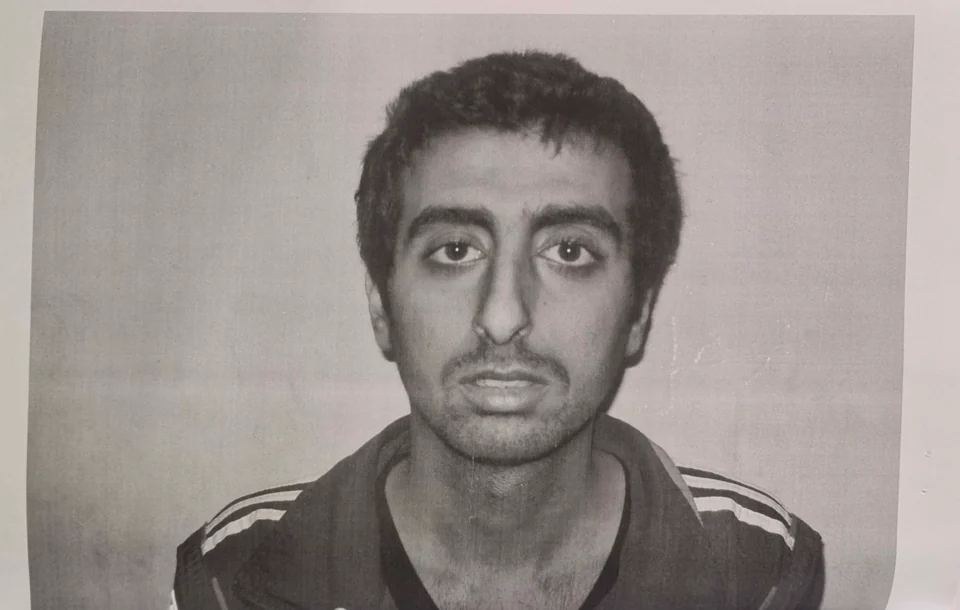 Detention photograph · 2011
The file
This dossier did not begin on the day of arrest. It began in 2009, when security records started to treat journalistic writing as information to be collected. Over the next two years writing, travel, email, university life, relationships and phone calls accumulated until the file became an arrest and detention record.
The summons
The article that opened the file.
A newspaper article on poverty becomes part of the security record. On 4 May 2009 a call from Branch 235 asks Matar to come for “a cup of coffee” — an investigation. The following day he is questioned about why he writes about poverty in Syria.
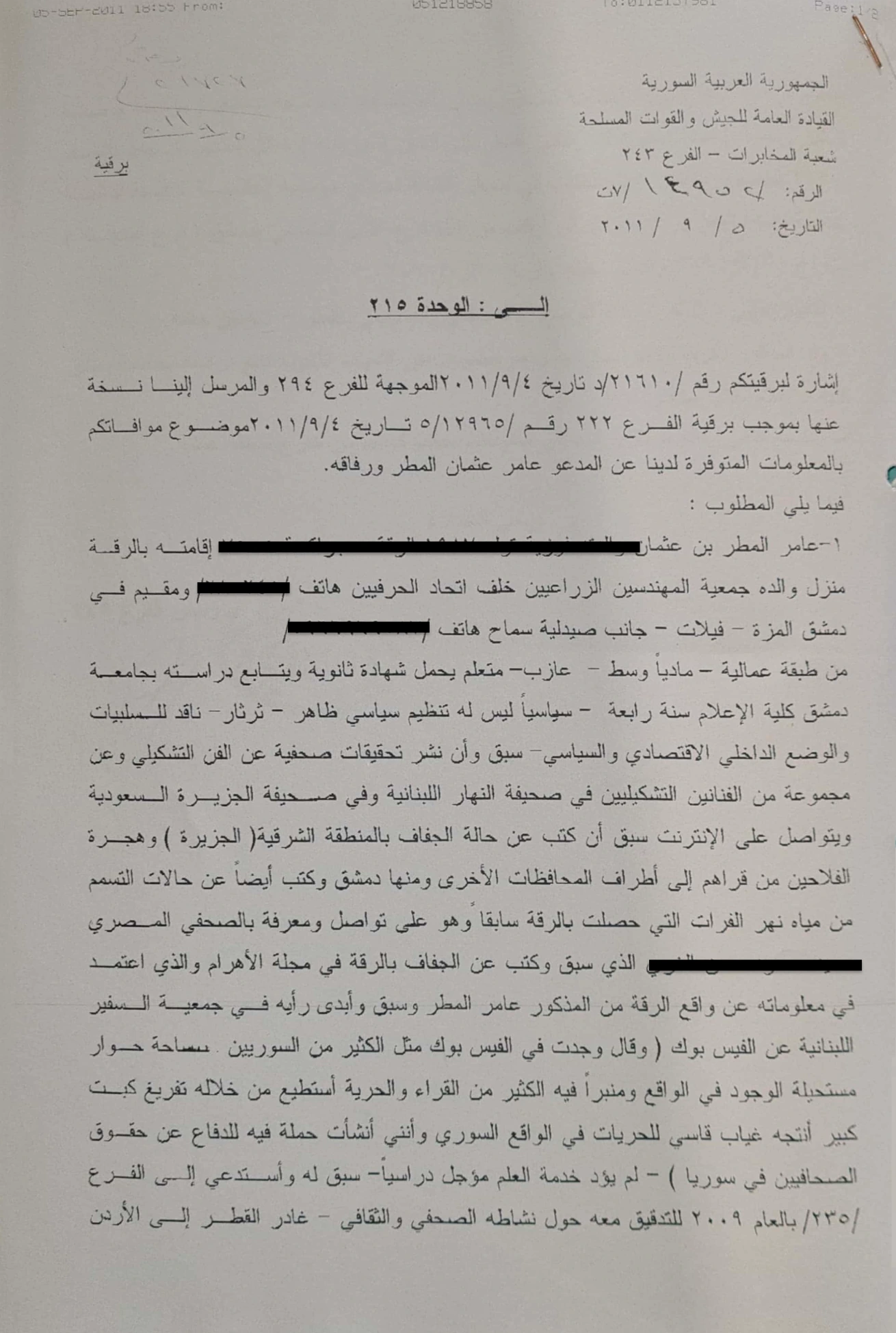
This later memorandum reconstructs the earlier history of writing, travel and security attention. It is not the original 2009 note; it shows how older information was pulled back into the file after arrest.
Surveillance
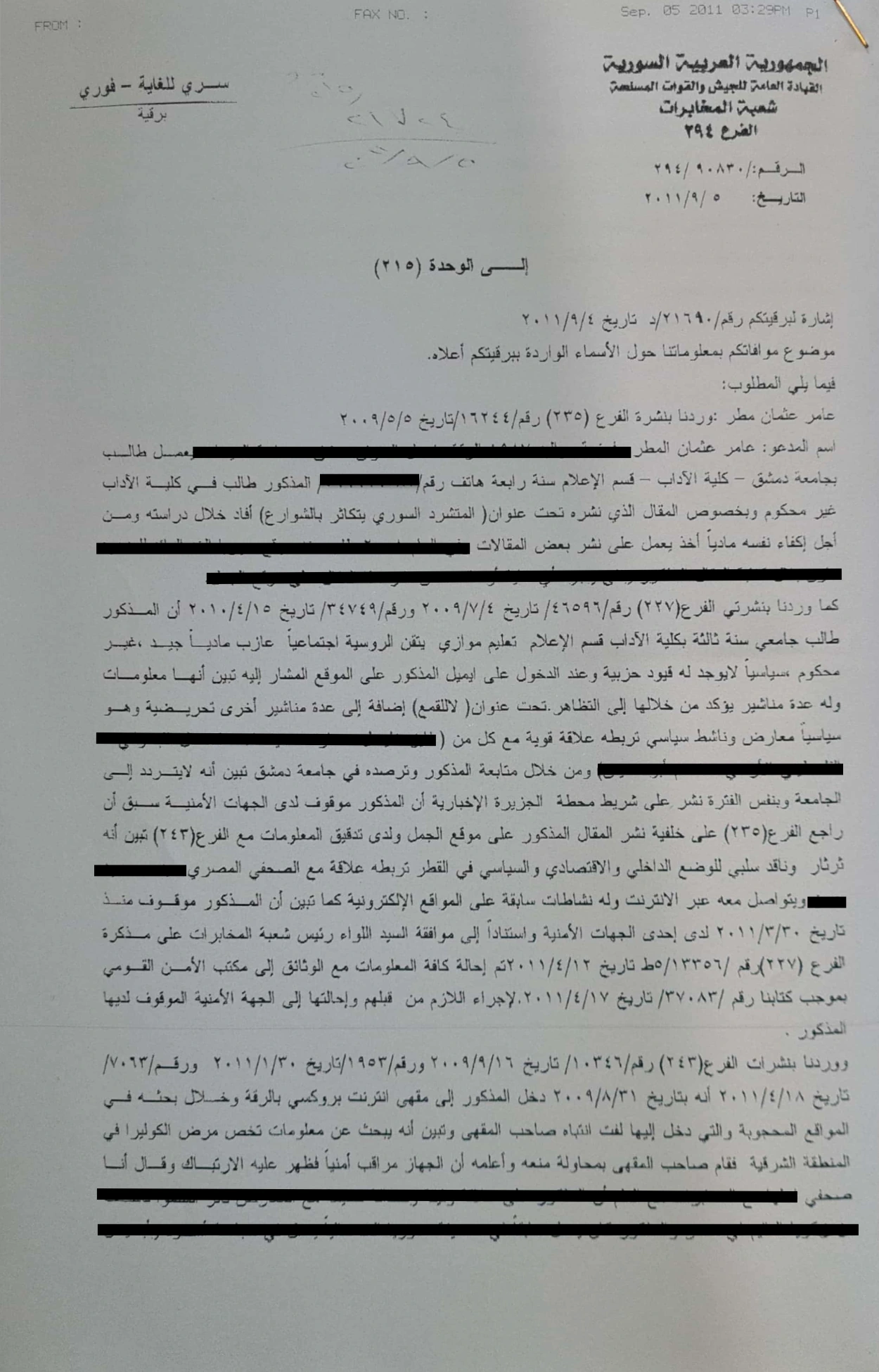
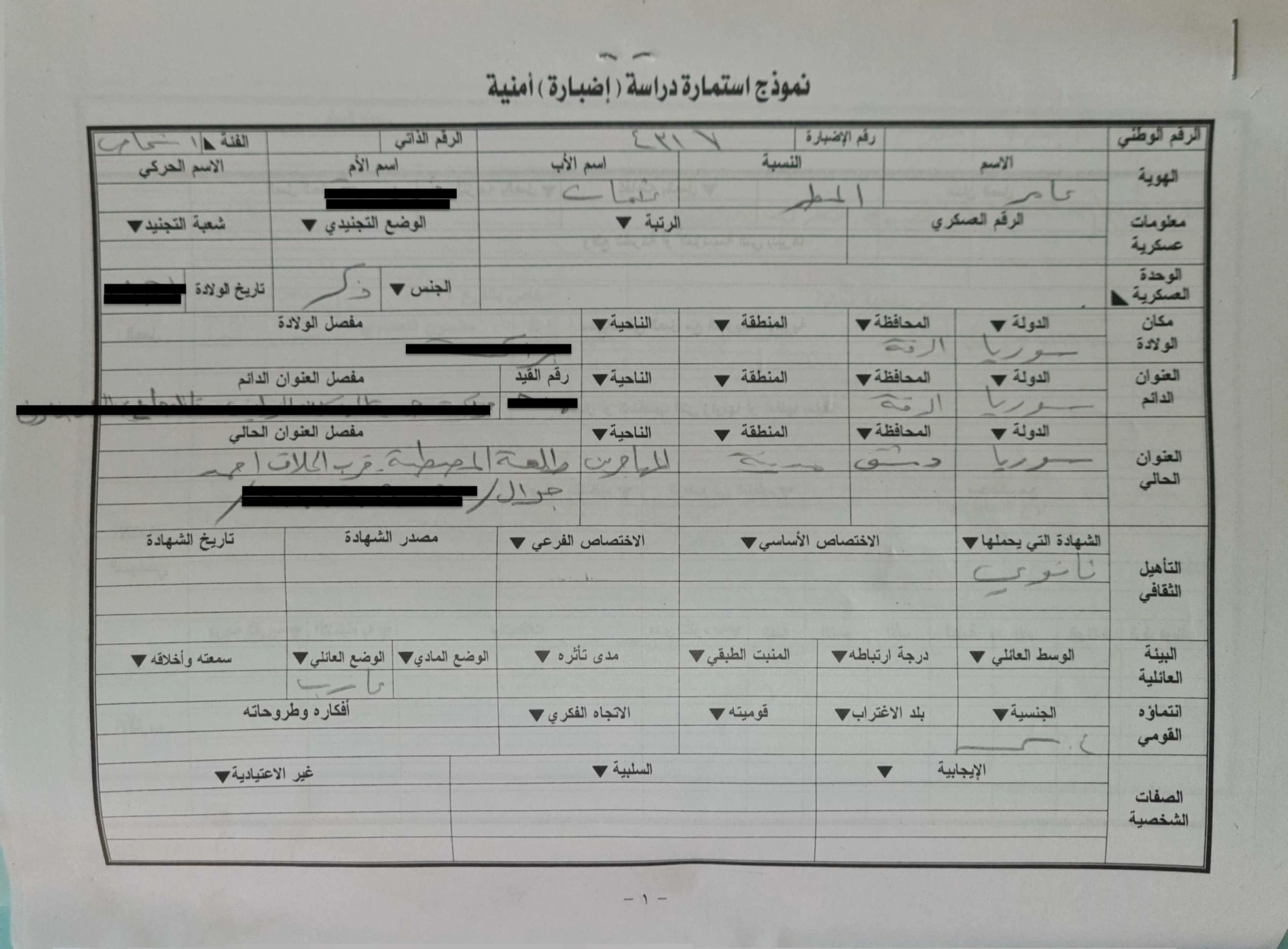
The file expands beyond a single article. Branch 227 records electronic activity and university follow-up; Branch 243 reconstructs family, residence, study, writing and travel; other records turn reporting on drought, displacement and public activity into security data.
A life is broken into entries.
First arrest
Matar is detained at Branch 251, al-Khatib. When that episode later re-enters a Military Intelligence dossier, the records disagree over dates, the detaining agency and the description of the case. The contradiction is itself part of the evidence: the archive is not a single coherent voice.
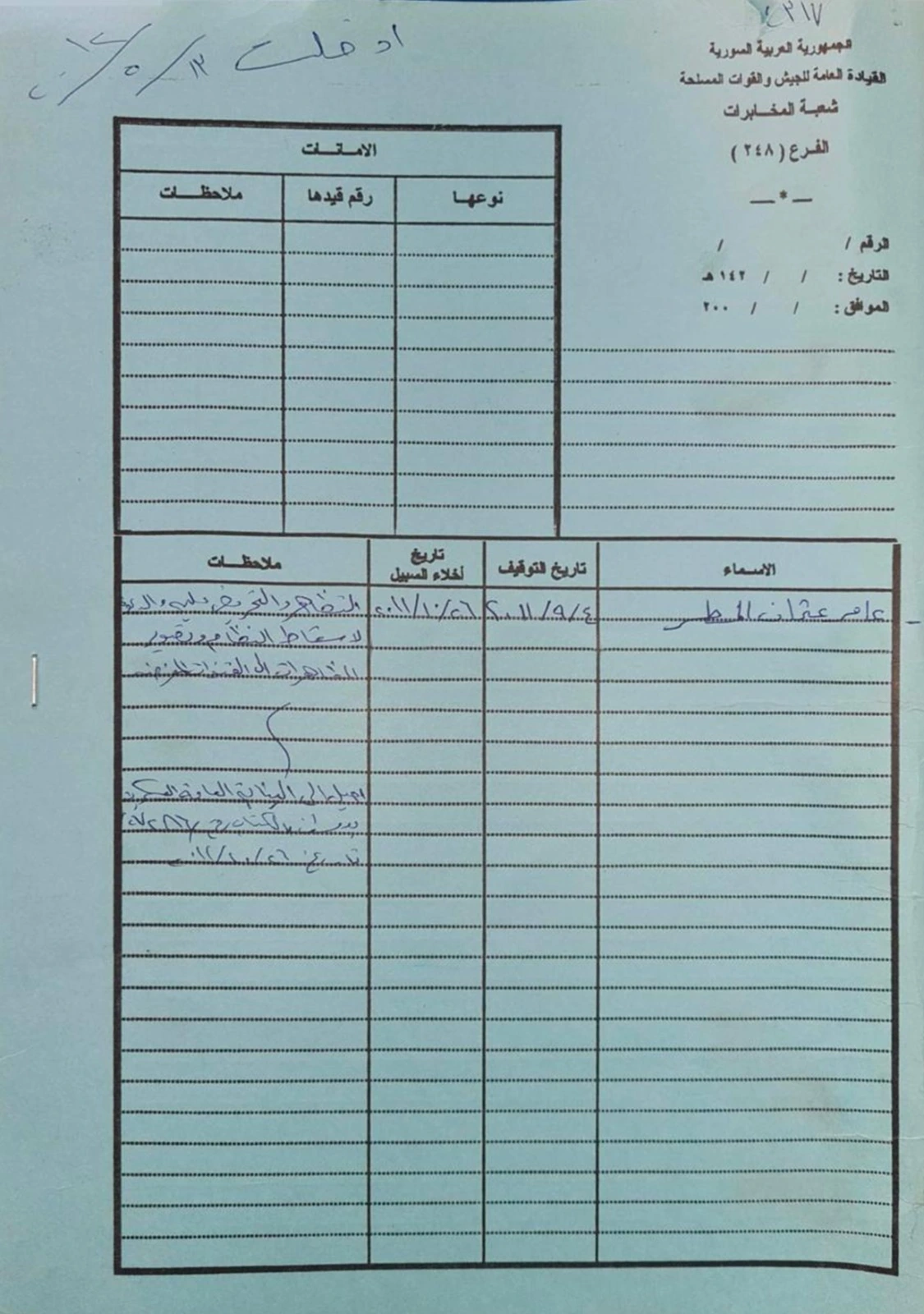
A later administrative registry compresses detention into dates, names and short notations — another layer of the file rather than a complete account of the arrest.
The phone enters
After the first arrest, the file shifts from accumulated bulletins toward direct monitoring. By early August information about film work around Hama reaches Unit 215. A handwritten instruction on the record orders follow-up.
The file stops watching only what is published. It starts listening.
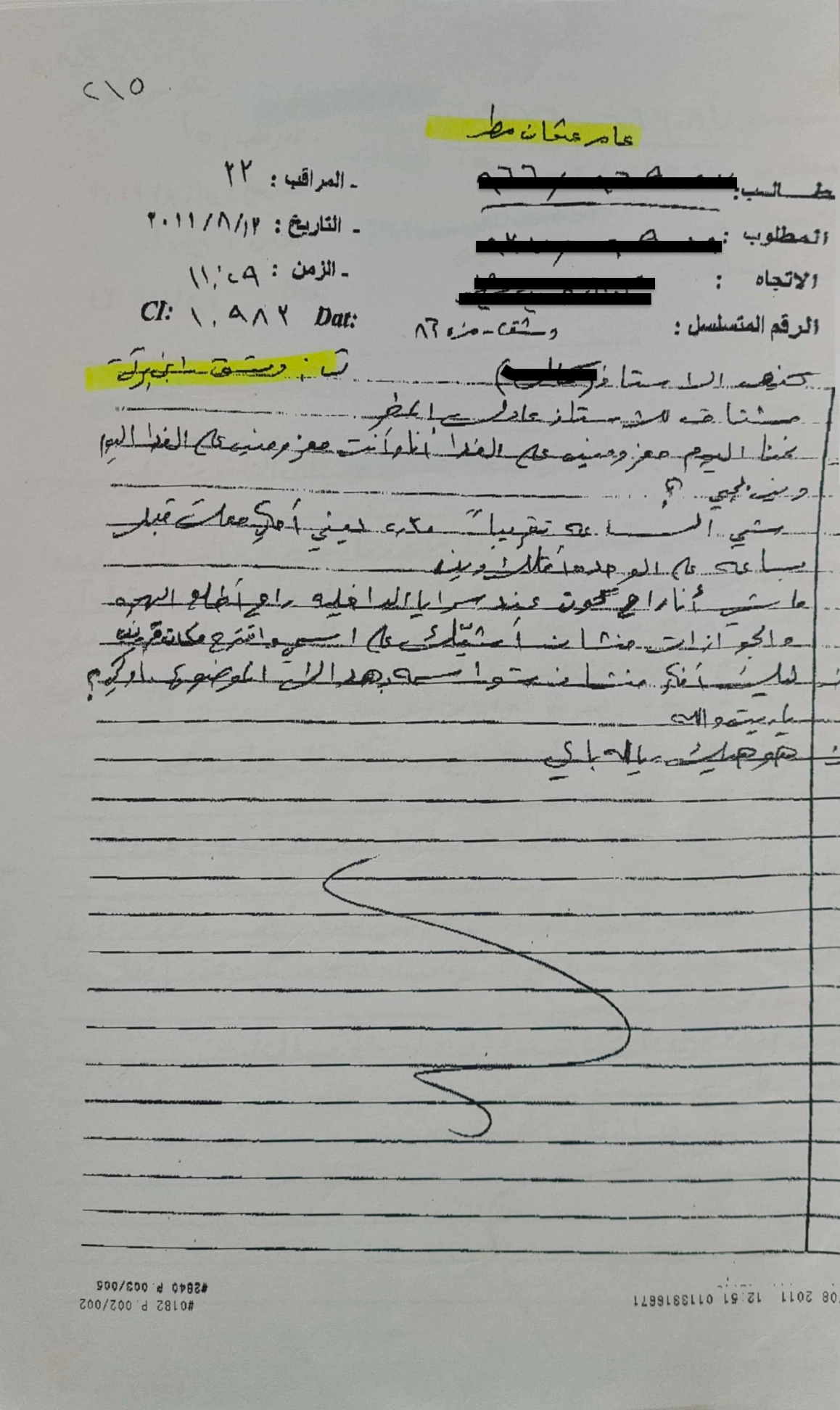
A routine conversation becomes a formal security record. The importance of the page lies not in what the call says, but in the fact that ordinary speech is now captured inside the dossier.
Inside the dossier
A sequence of transcribed calls records invitations, water cuts, people stranded outside the city, media statements and movement through ordinary spaces. The boundary between political activity and daily life disappears.
The phone became part of the dossier.
The ambush & the network
Matar is arrested during the night of 3–4 September; the official records use 4 September as the arrest date. Within hours Unit 215 sends urgent requests asking branches to search their records and return what they know.
Twelve hours to gather a life
The request activates information produced across years and places. Branches return material about family, residence, study, writing, travel, contacts and the earlier arrest.
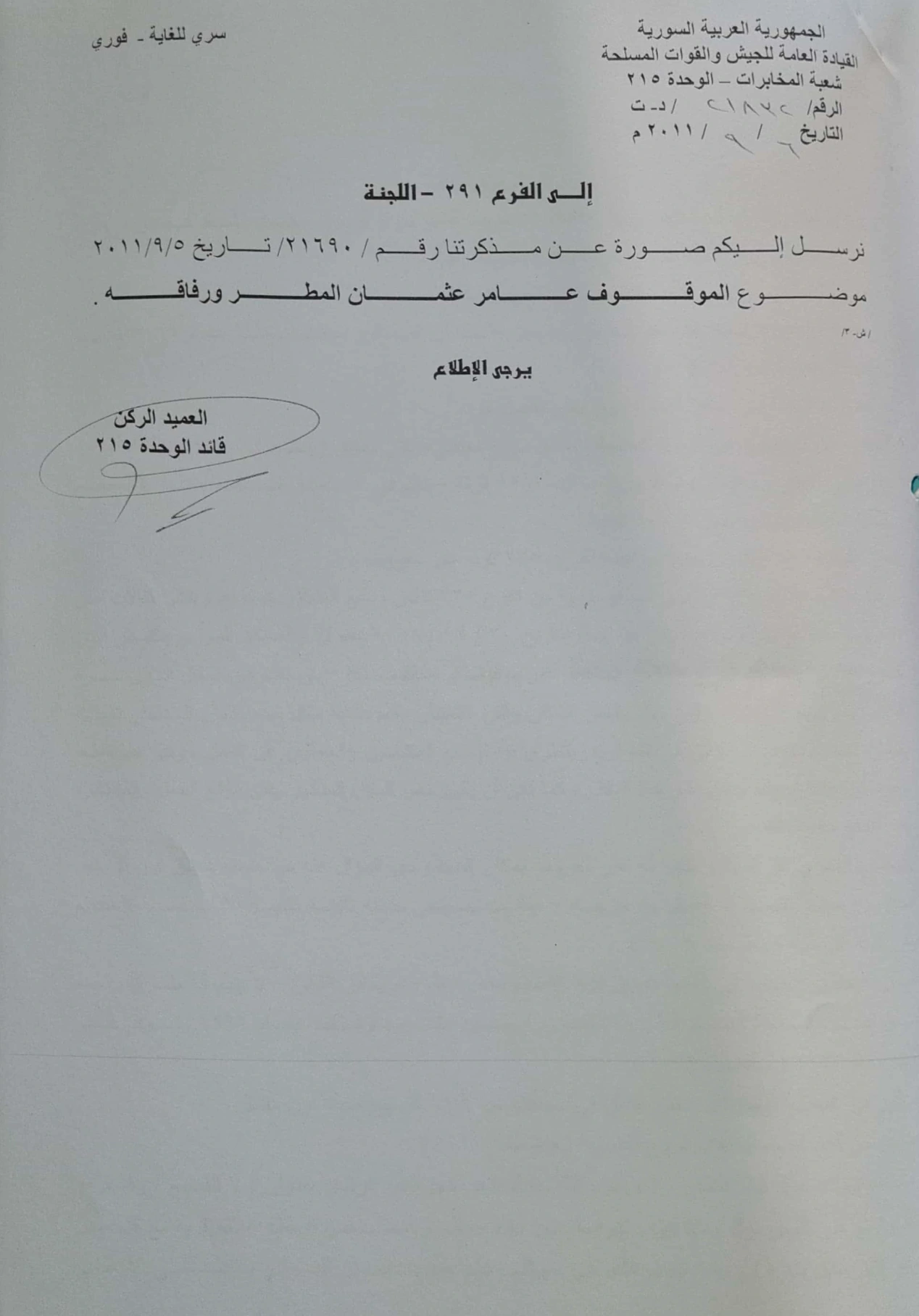
The extension machine
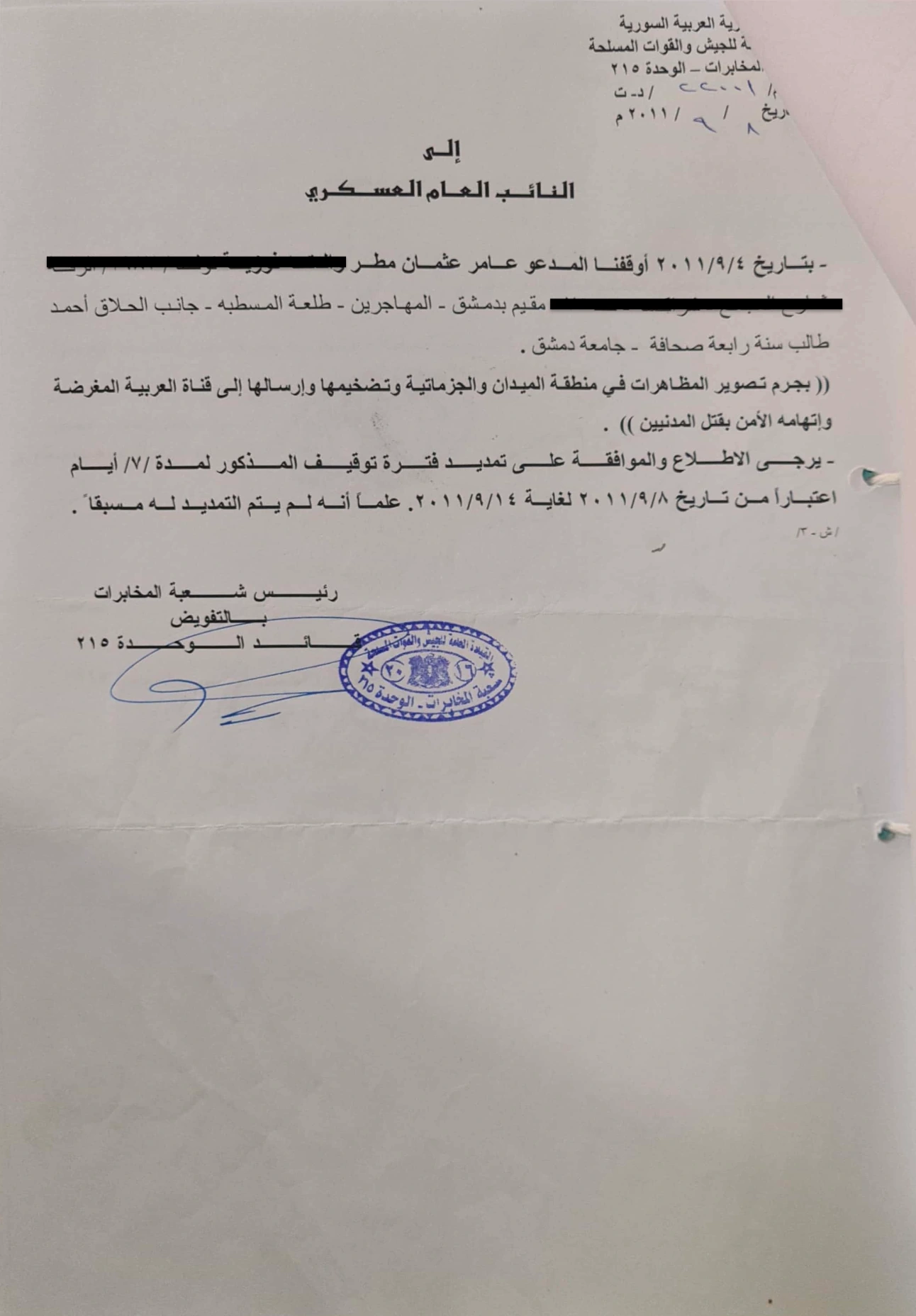
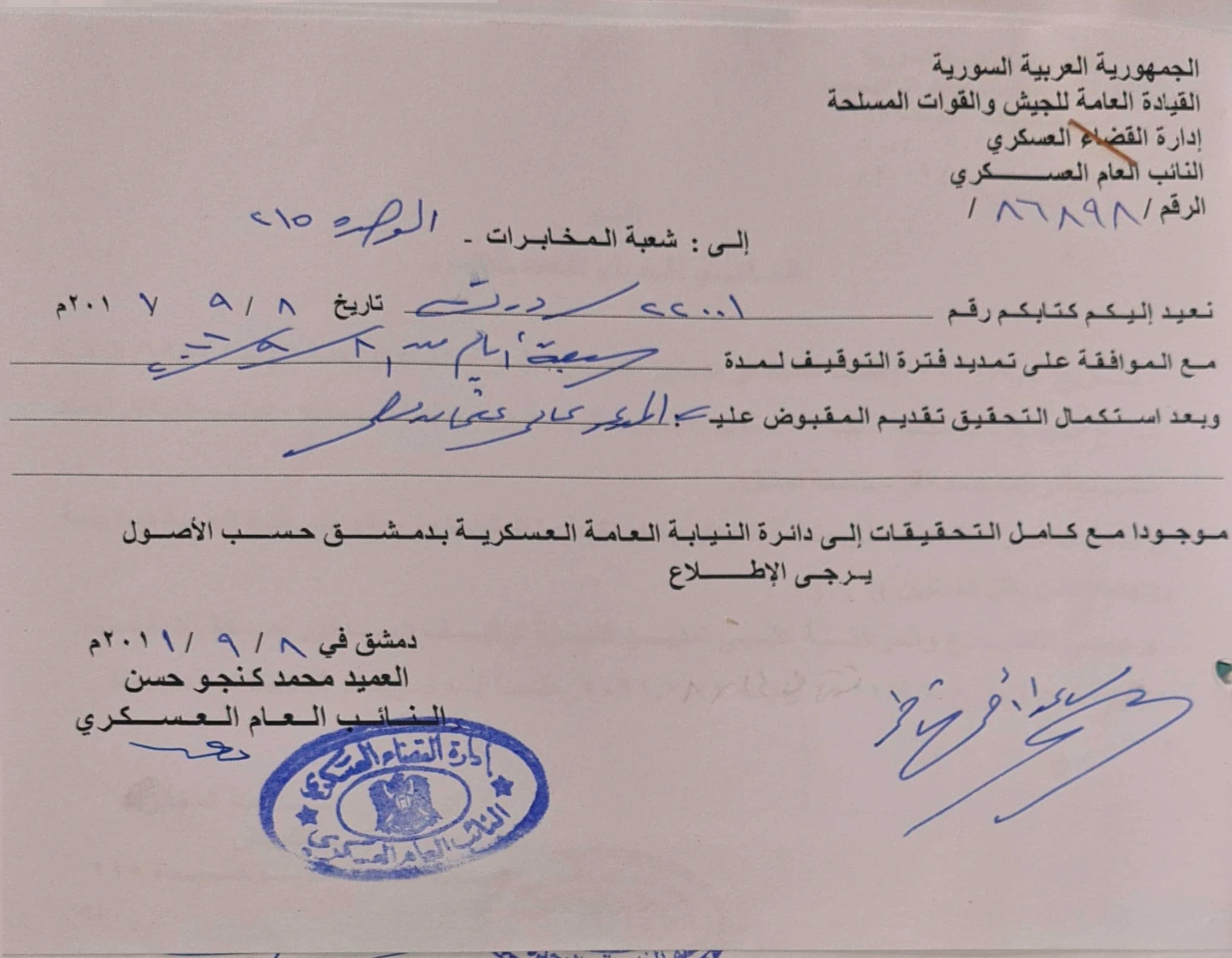
Four days after arrest a repeating sequence begins: a request from Unit 215, approval from the military judiciary, seven more days, then another paper. The dossier records seven requests and seven corresponding approvals.
One paper creates a week. The week ends with another paper.
Referral
52 days.
On 26 October Unit 215 writes that it is presenting the detainee to the Military Public Prosecutor. By this point the description of the case has expanded from filming and sending media material to a broader set of allegations. This is where the movement of the file inside Unit 215 ends; detention itself does not. Matar is transferred onward to Adra Prison.
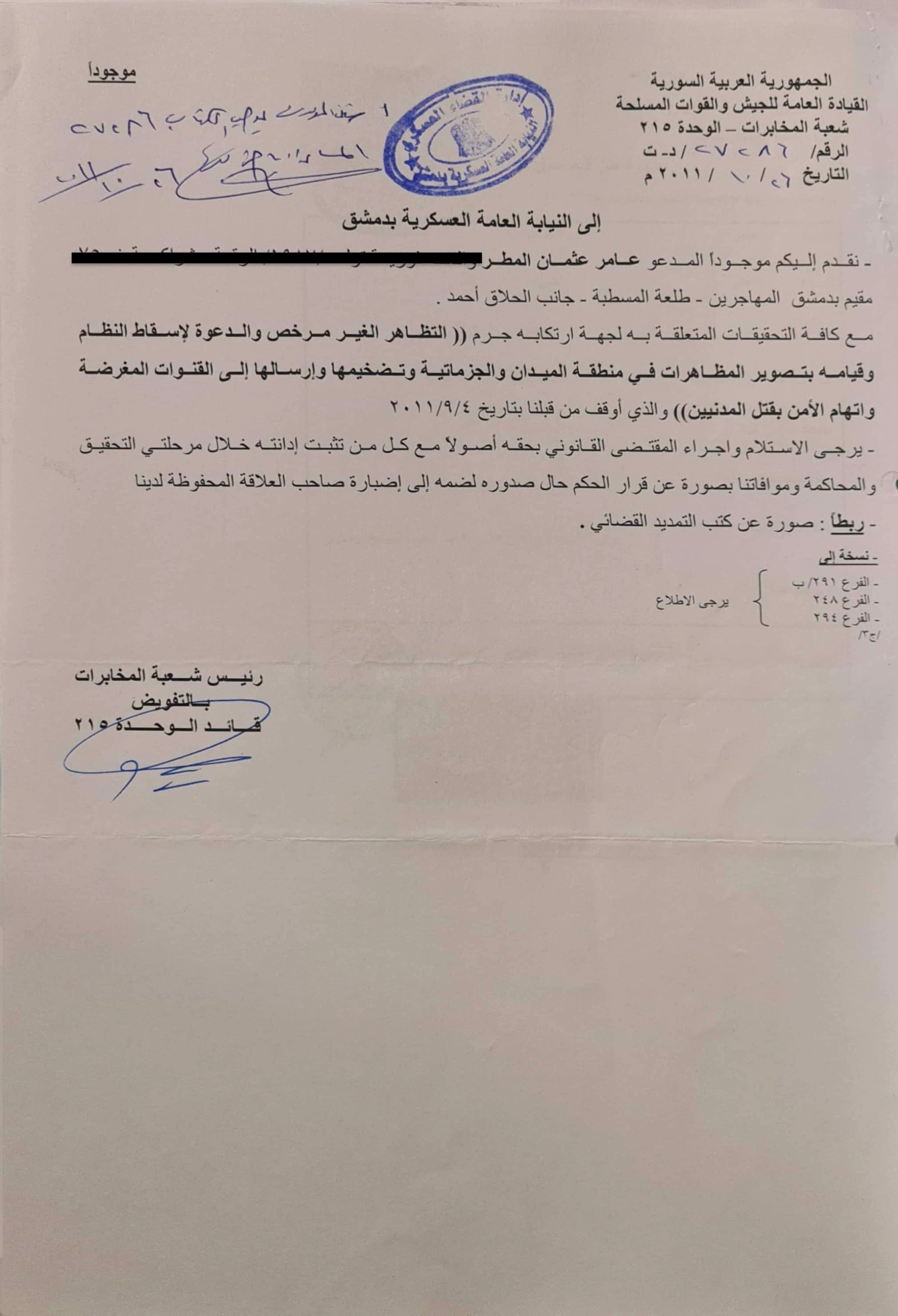
The document marks the administrative end of the 52-day sequence inside Unit 215 and the transfer of the case into the military judicial chain.
02 / The system
Who was doing what?
The numbers that appear in the dossier are not the names of anonymous offices. Here is each body’s remit as the study describes it, kept apart from what the papers of File 4217 actually establish about it.
The general structure is drawn from a study covering 2011–2024 and is not presented as a fixed inventory for 2011; the dossier itself runs 2009–2011. Per the study, the Division reports to the General Staff / Ministry of Defence.
This is a map of remits and correspondence, not a map of the detainee’s movements and not a finding of individual responsibility. Arrows show only the route described in the dossier text; no arrow means no unproven link is assumed.
03 / Inside Unit 215
What the paper says, and what the testimony tells
The full filmed testimony recorded inside Branch 215 after the fall of the regime. The interview is presented here as one continuous recording.
DOCUMENT
ARCHIVE
Twenty-five photographed pages from Matar’s personal security dossier, photographed at the site where the dossier was found. Full-resolution versions load only when a document is opened.
Detention registry sheet
Branch 248 registry summarising detention entries.
Security study form · page 1
Administrative profile form attached to the security dossier.
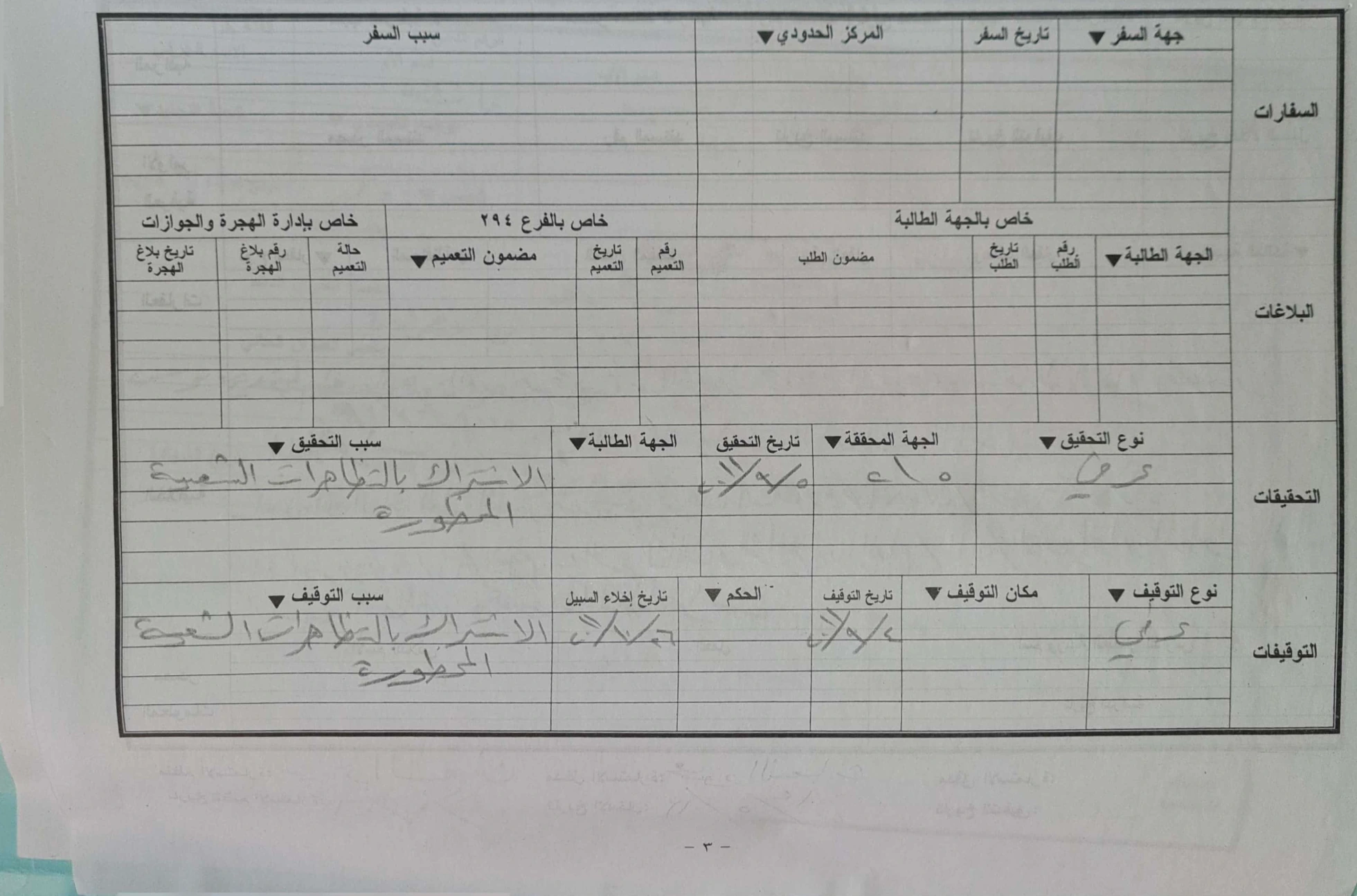
Security study form · page 3
Travel, reports, investigations and detention fields.
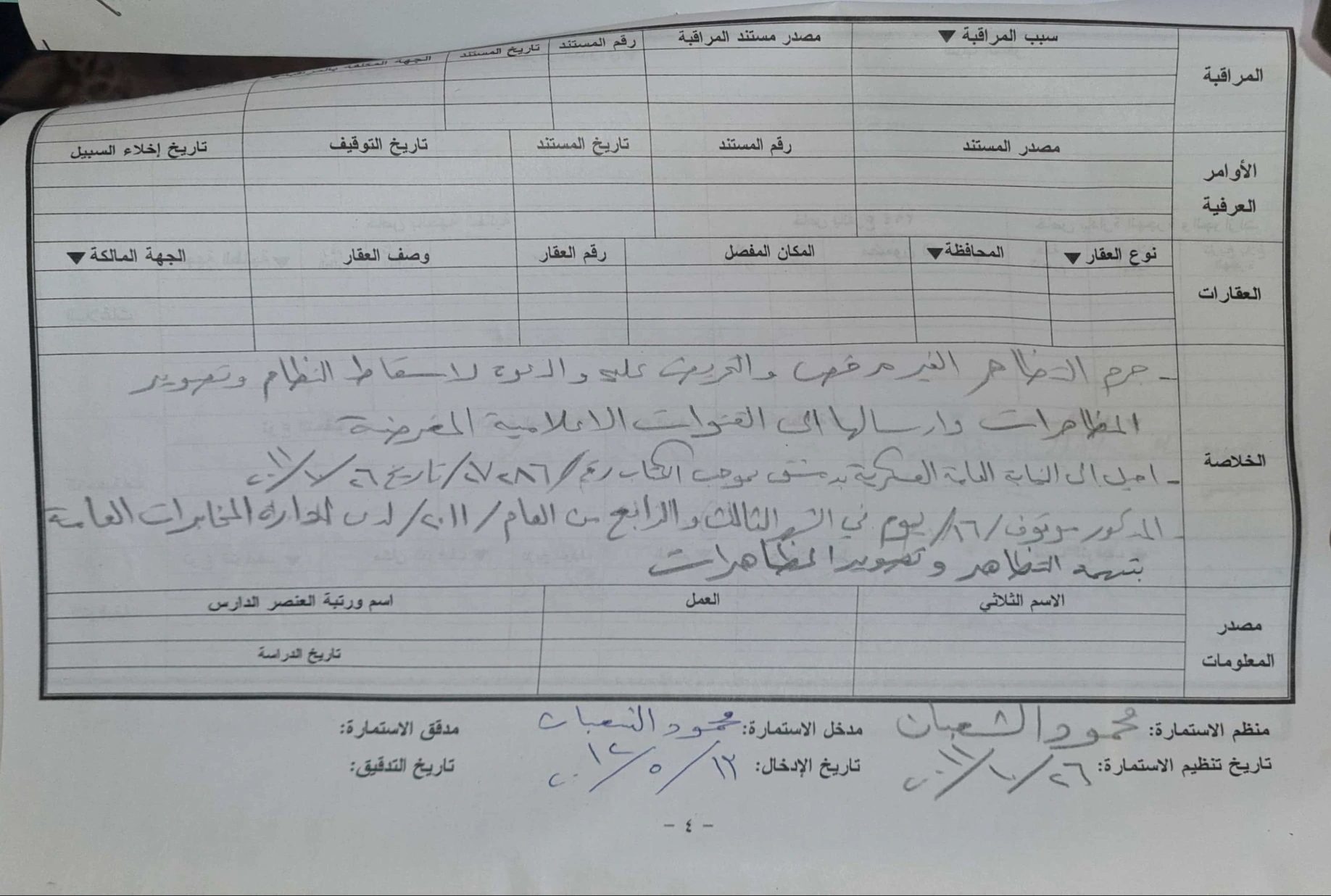
Security study form · page 4
Monitoring, arrest orders and summary fields.
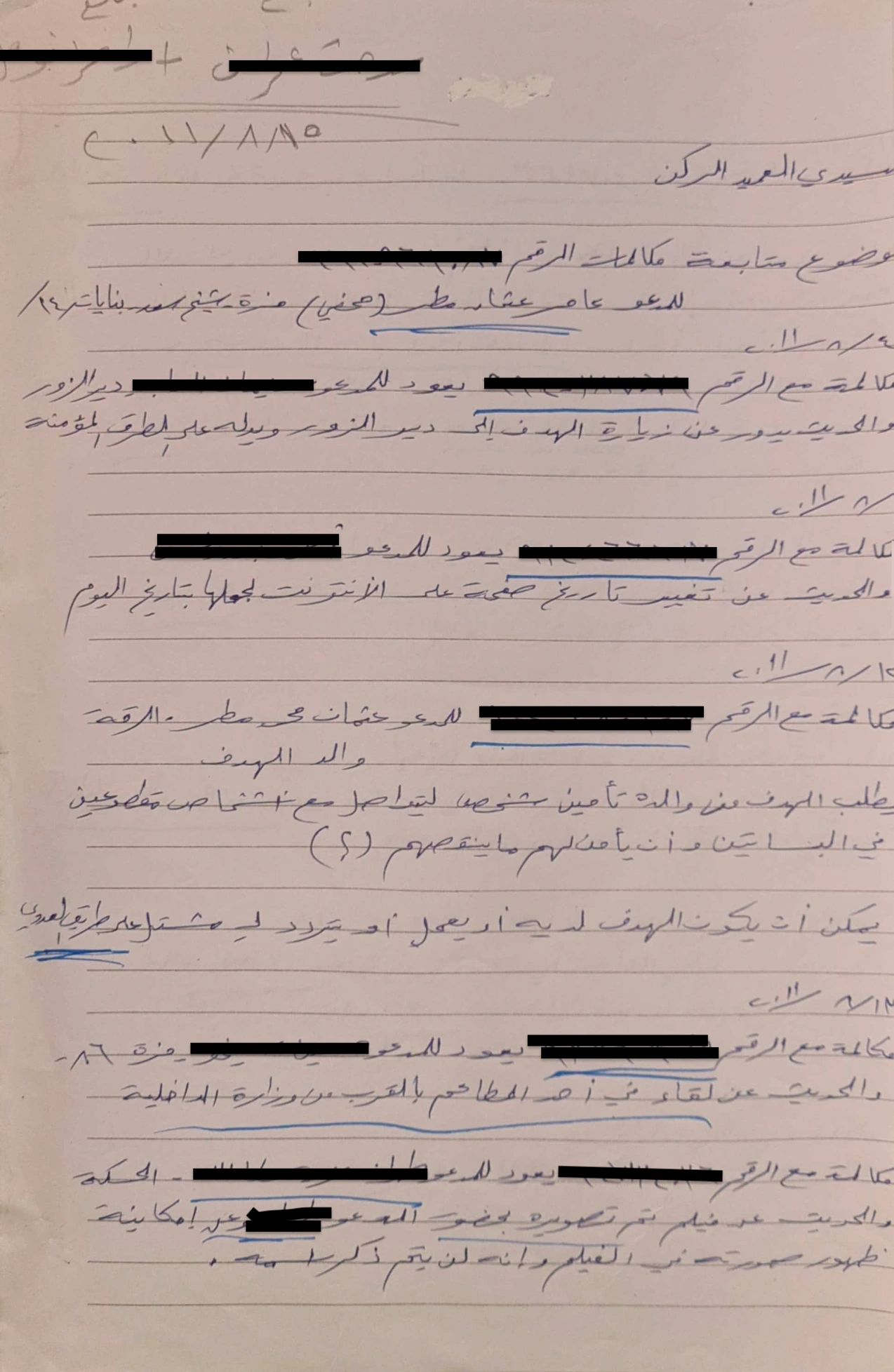
Intercepted-call note
Handwritten monitoring note from the telephone-surveillance sequence.
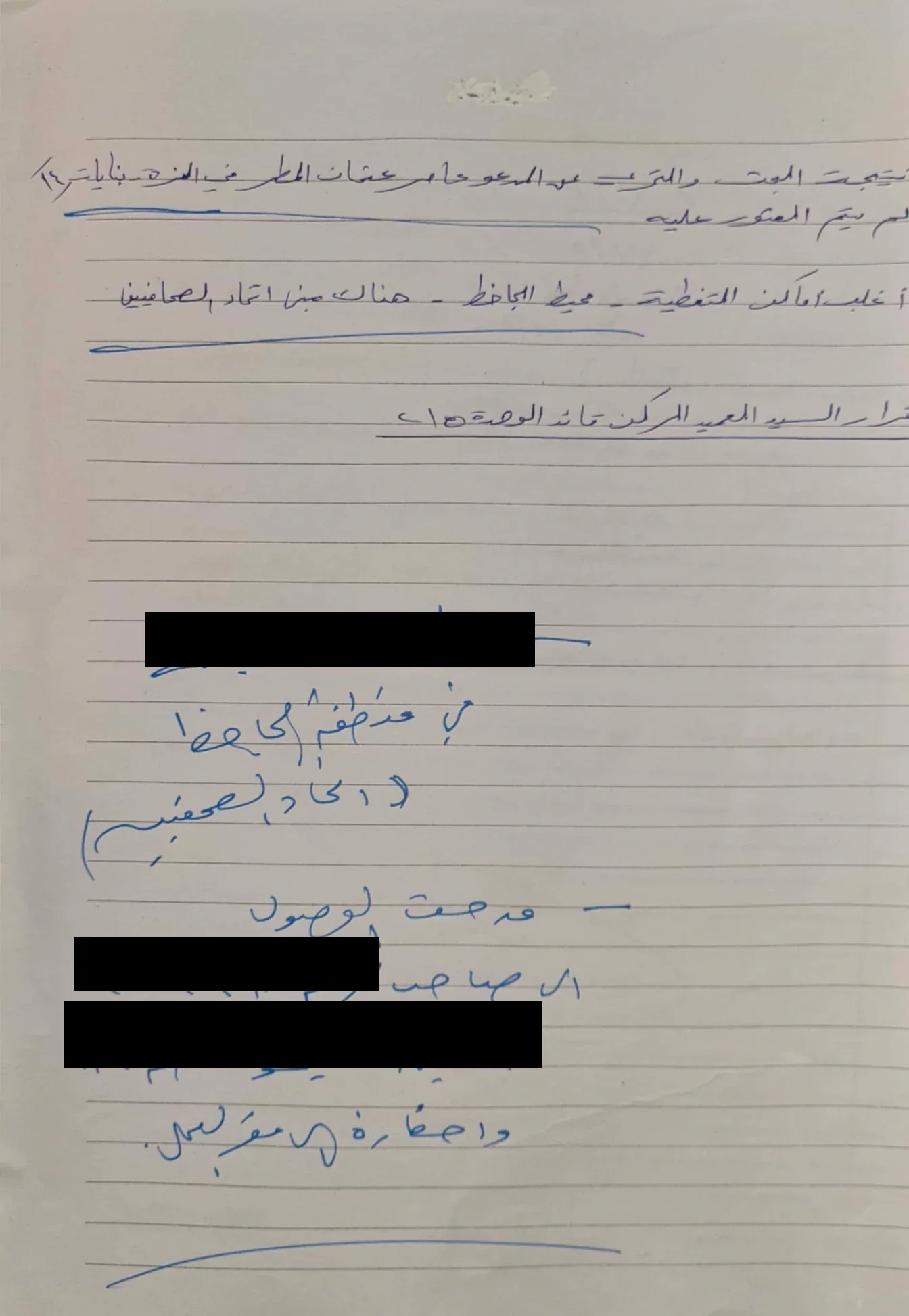
Intercepted-call note
A later handwritten note from the same surveillance sequence.
Intercepted call · observer 22
A routine call enters the security record.
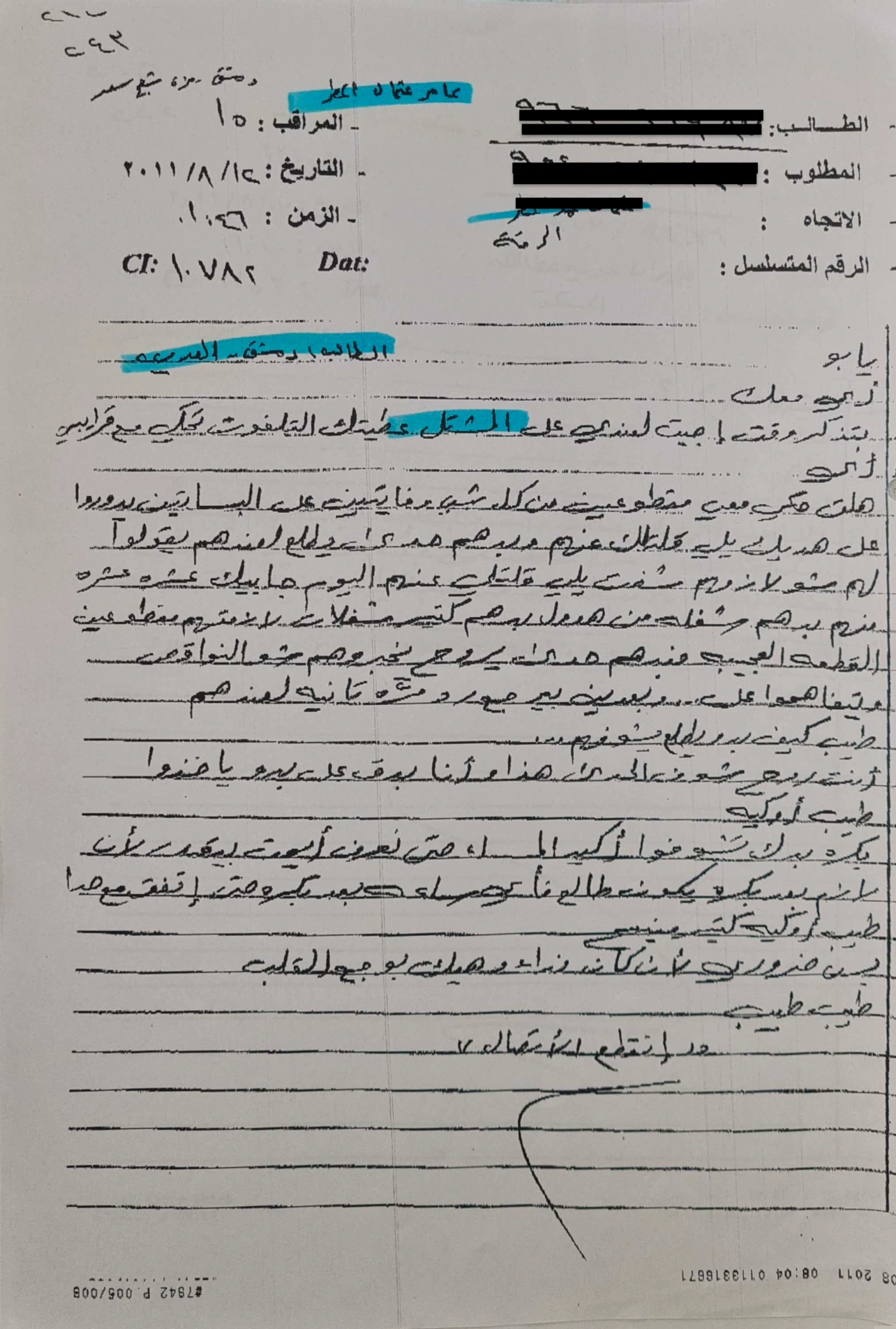
Intercepted call
A phone call recorded and annotated by the monitoring unit.
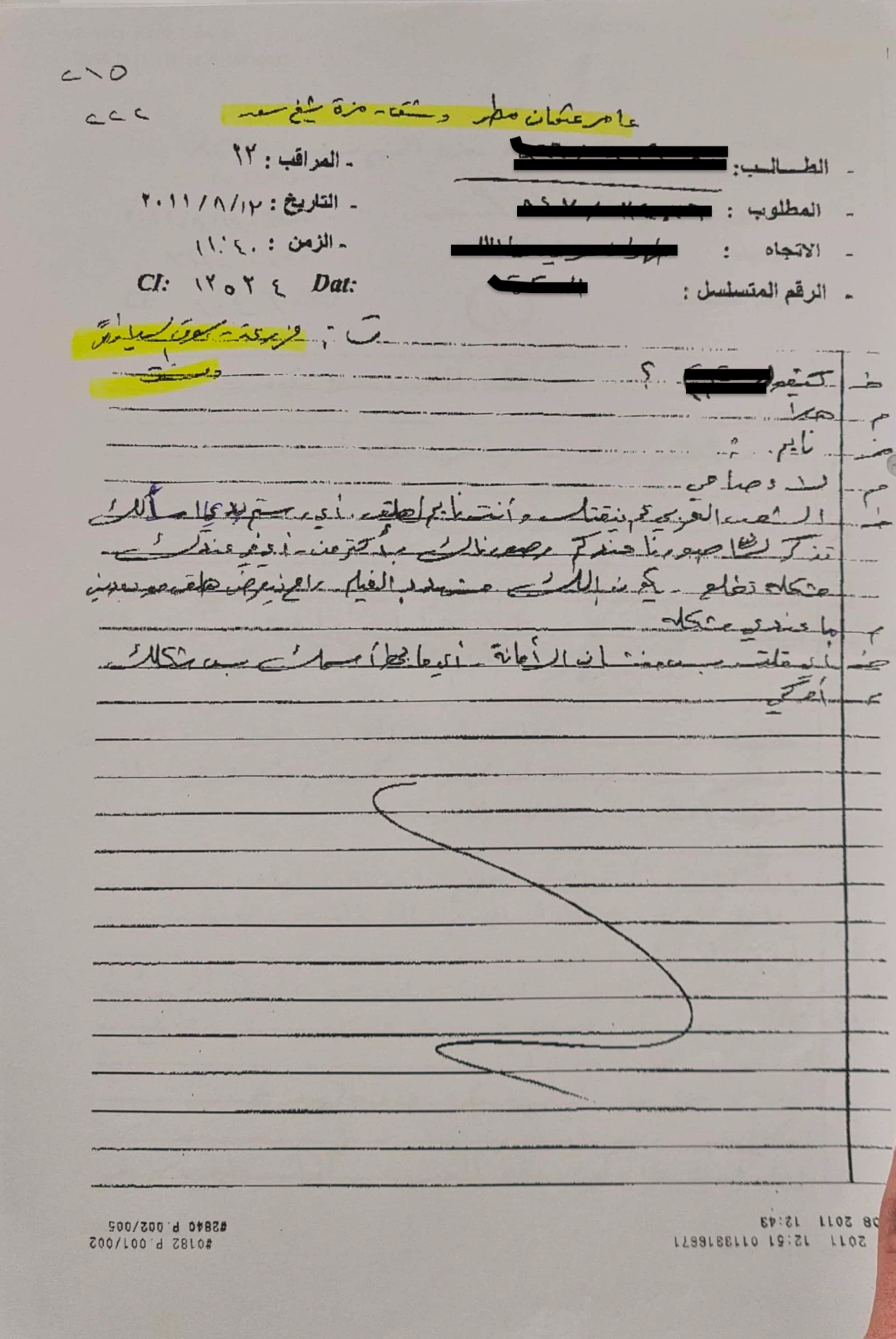
Intercepted-call note
Monitoring note carrying highlighted operational remarks.
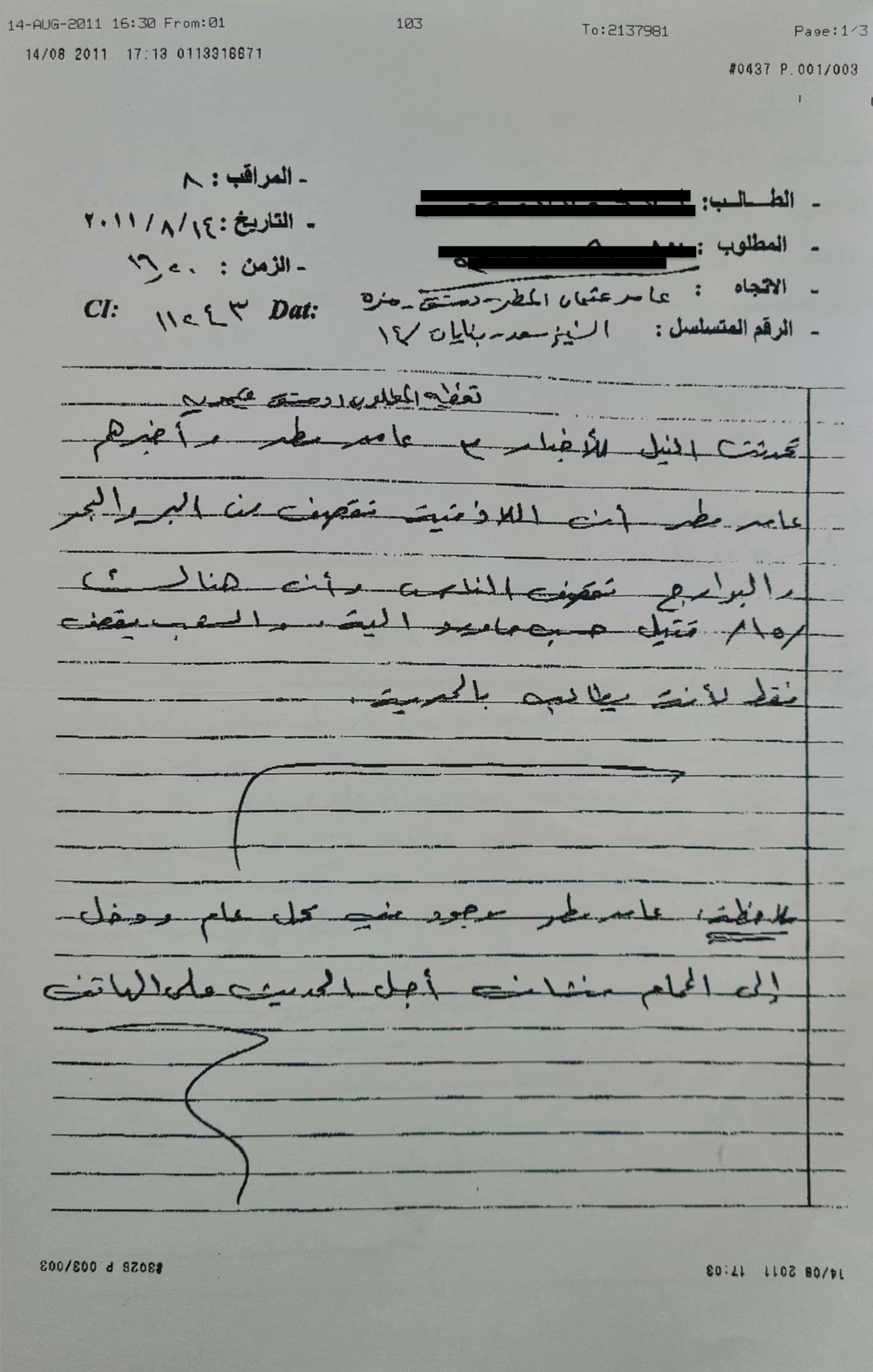
Intercepted call
A transcribed call entered into the security dossier.
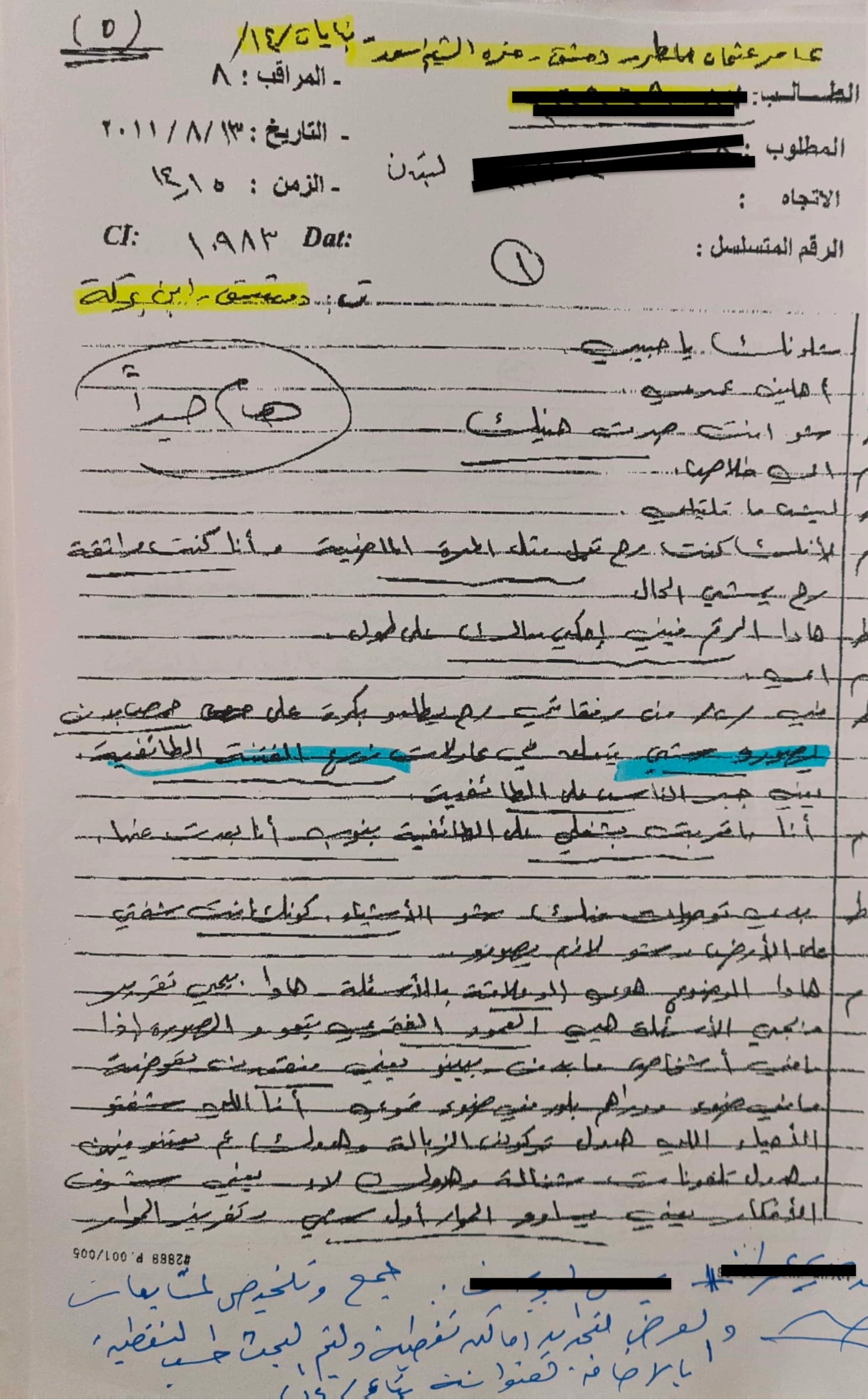
Intercepted-call note
Surveillance note with highlighted names and terms.
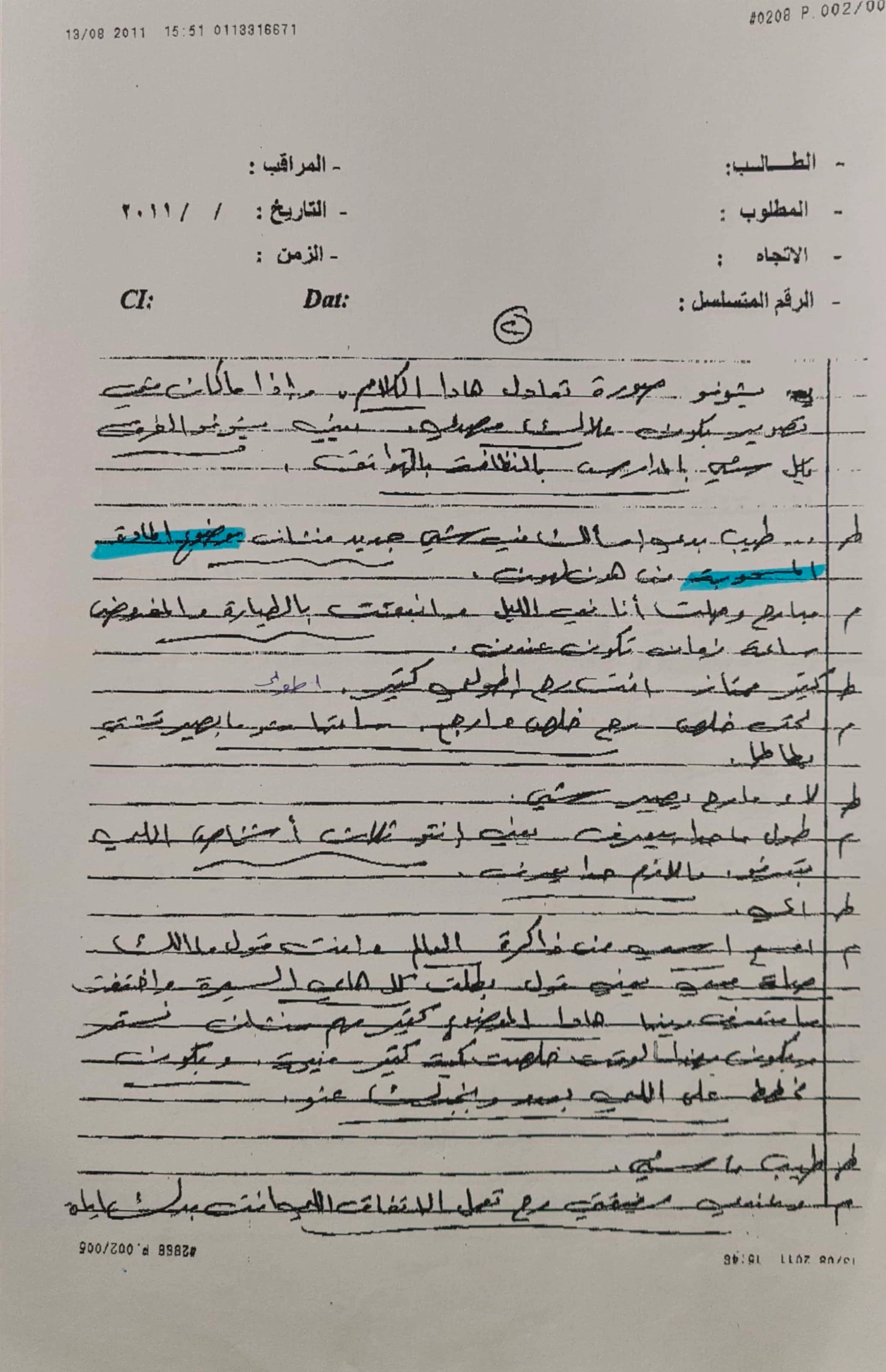
Intercepted call
A call summary from the August interception sequence.
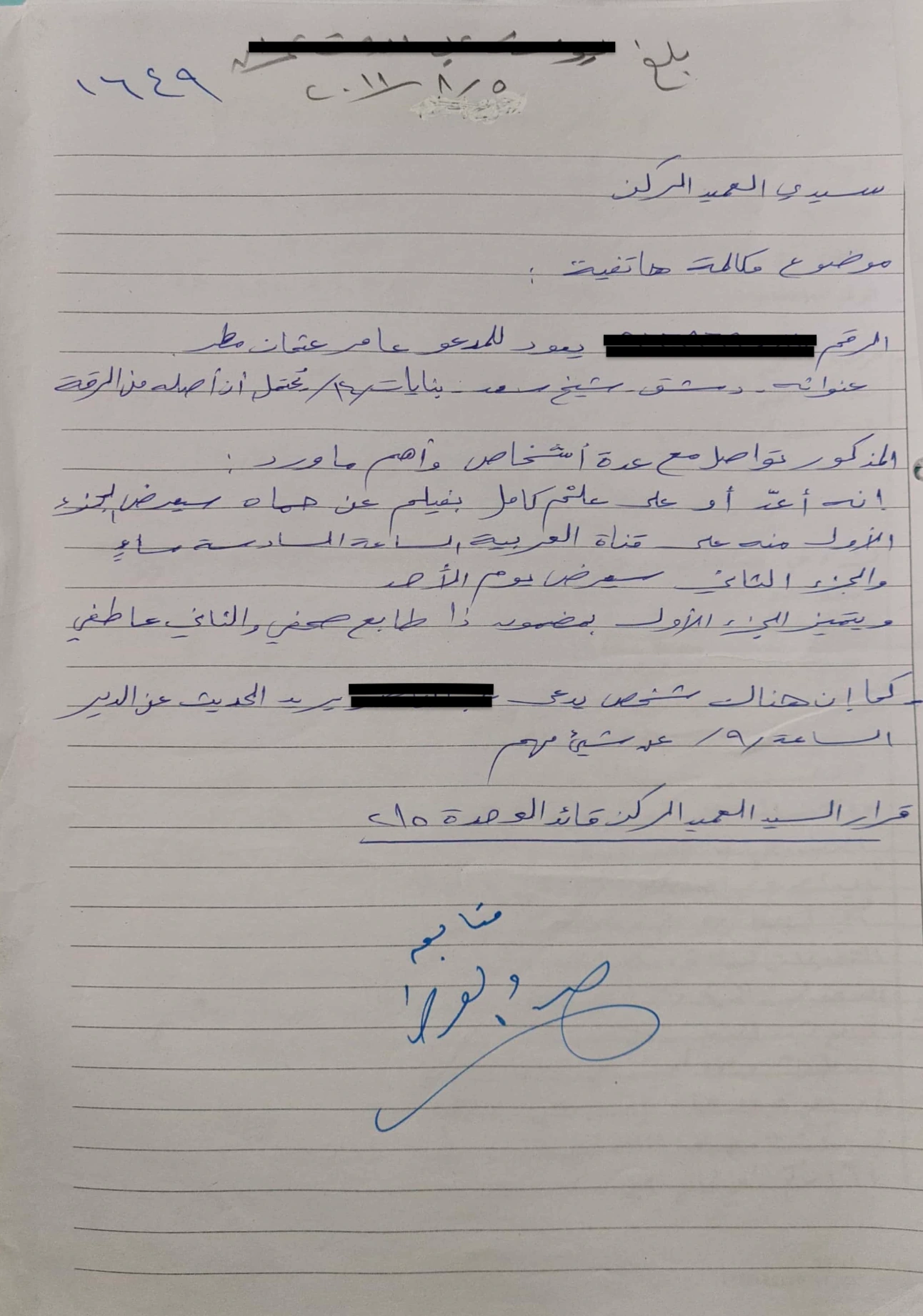
Call-summary memorandum
Handwritten memorandum summarising a telephone call.
Referral to the Military Prosecutor
Unit 215 refers the detainee to the Military Public Prosecutor.
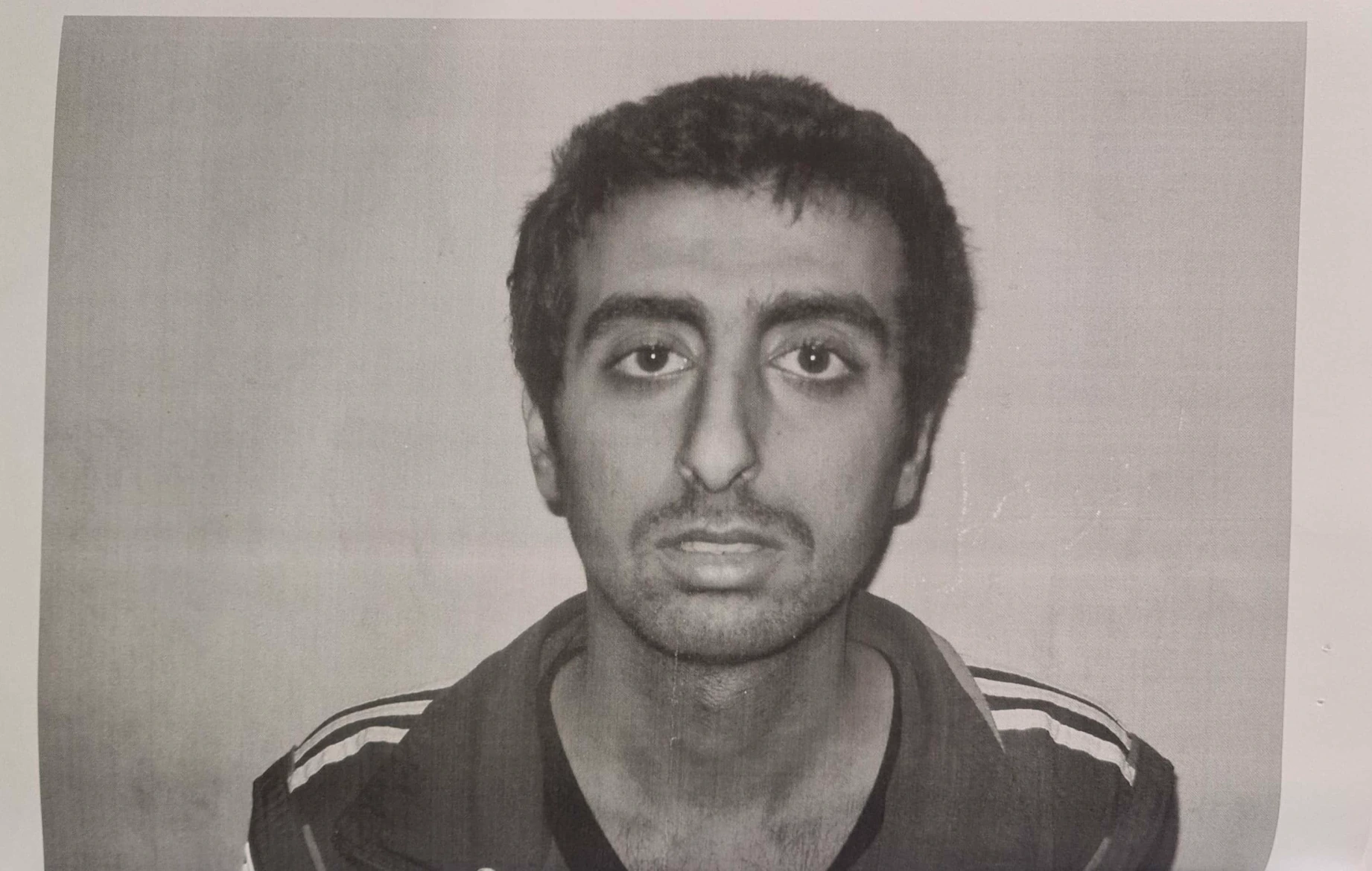
Detention photograph
Photograph of Amer Matar attached to the security file during detention.
Detention-extension request
Unit 215 request in the recurring seven-day extension sequence.
Military judiciary approval
Judicial approval within the detention-extension sequence.
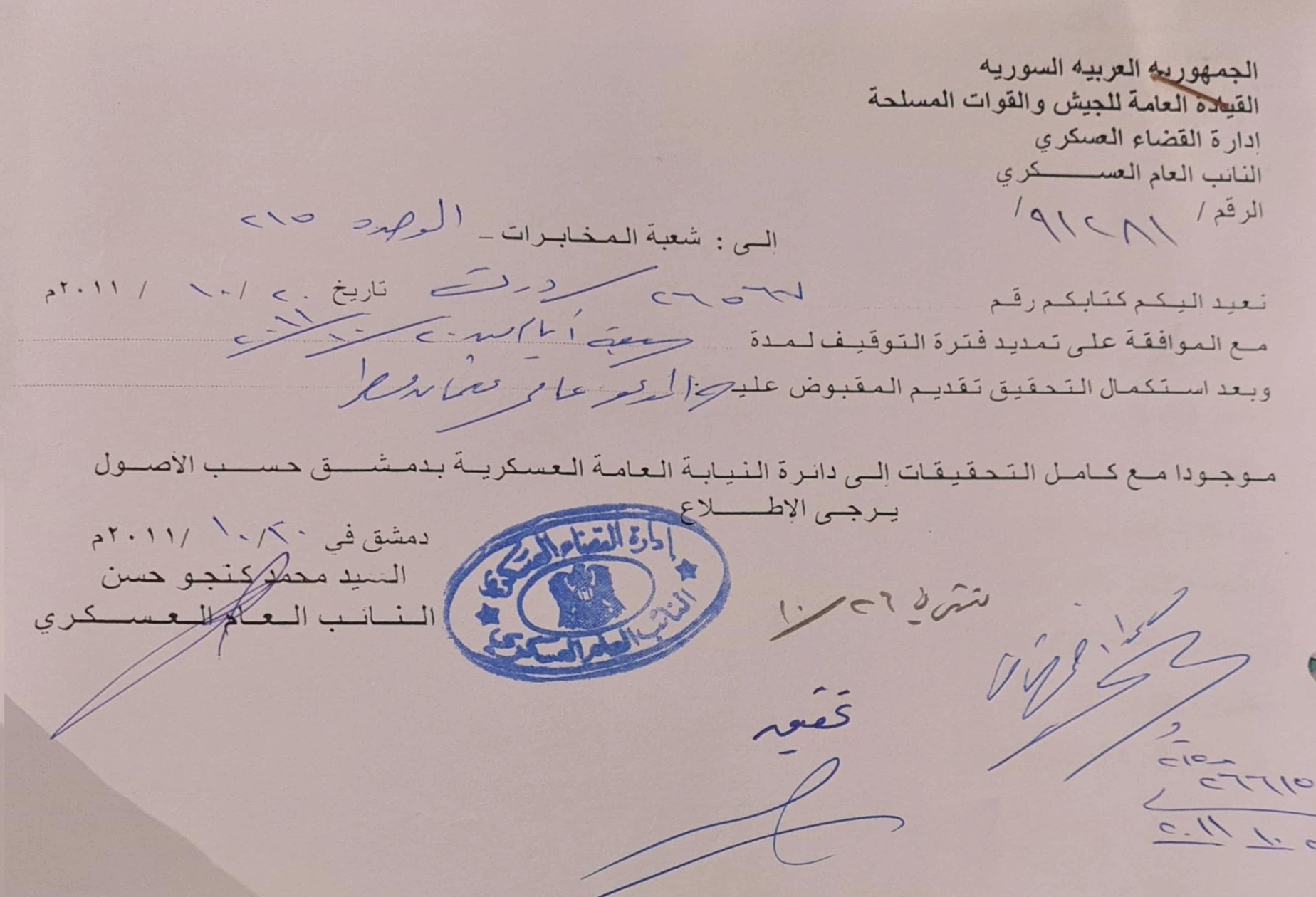
Military judiciary approval
A second approval from the recurring extension sequence.
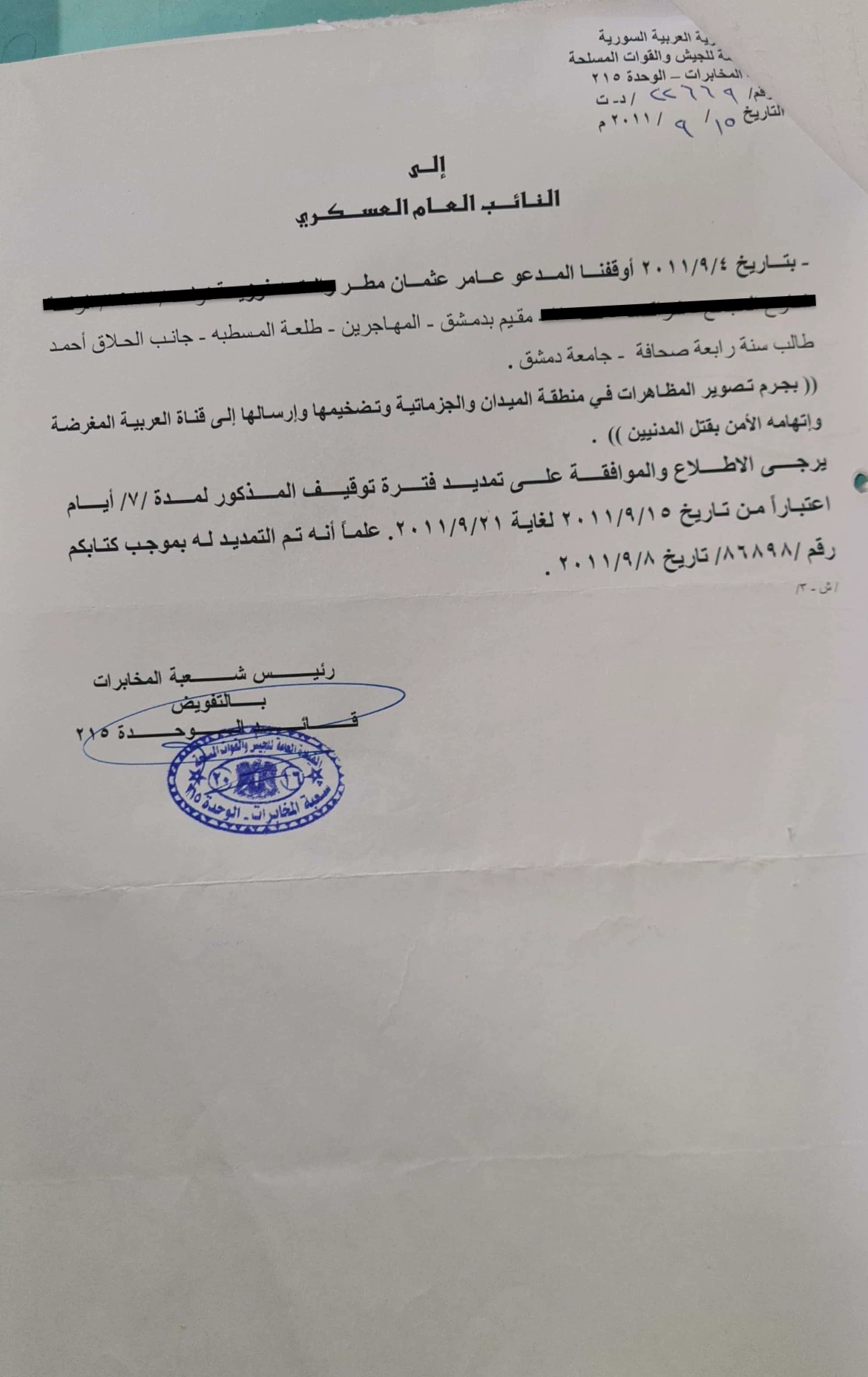
Detention-extension request
One of the seven-day extension requests.
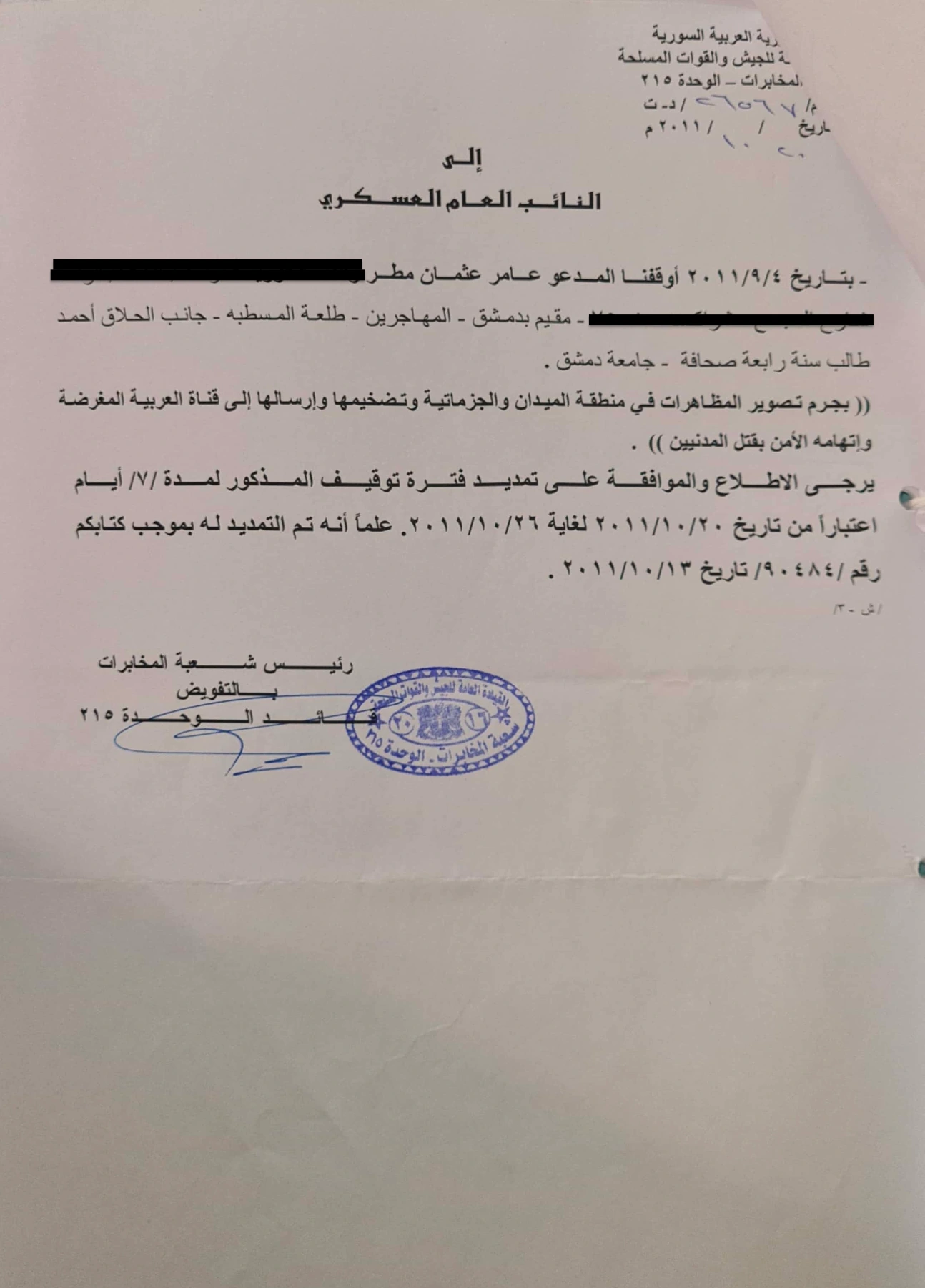
Detention-extension request
Later request in the same seven-day cycle.
Branch 243 memorandum · page 1
Security biography assembled for Unit 215 after the arrest.
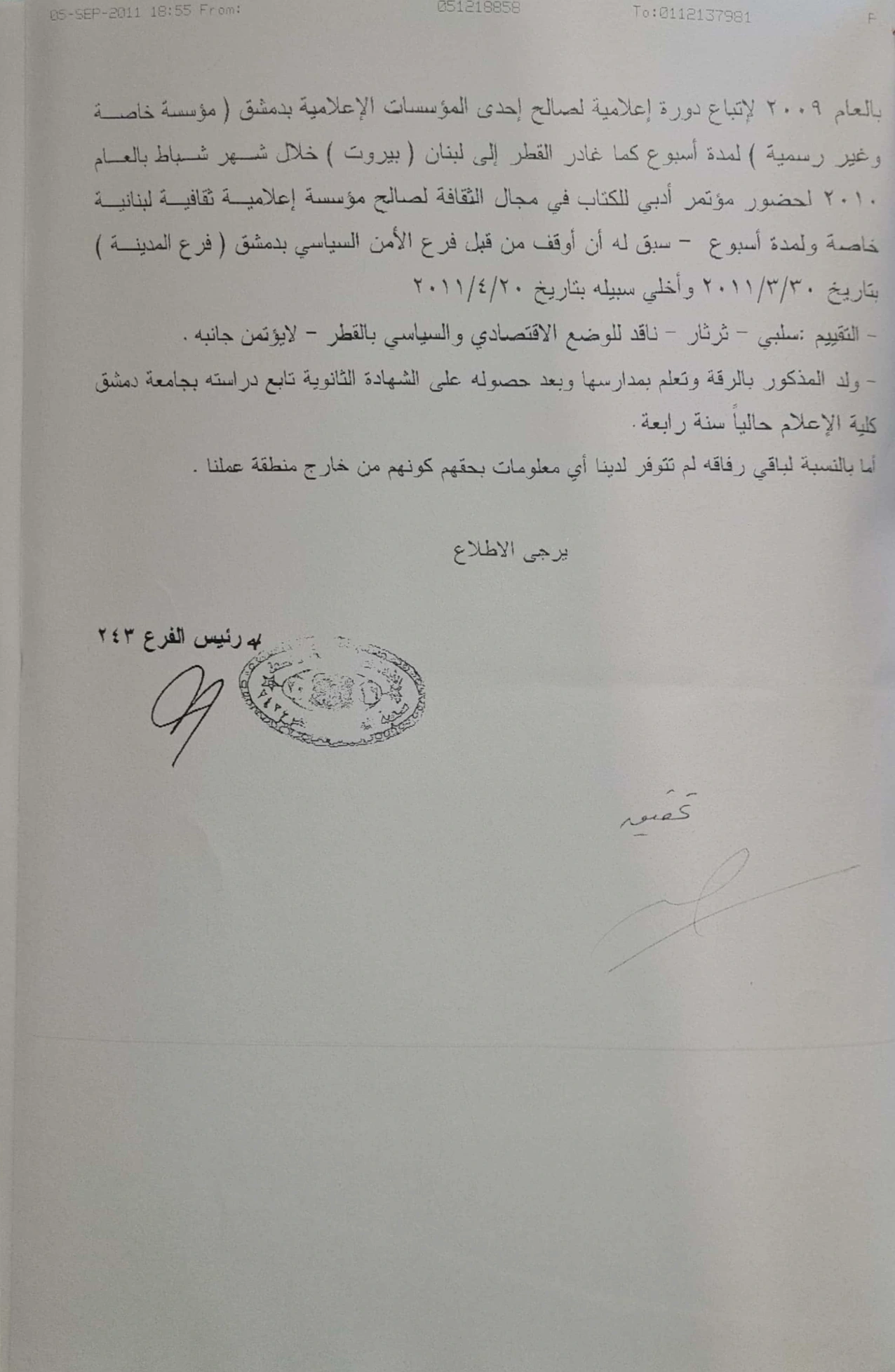
Branch 243 memorandum · page 2
Continuation of the Branch 243 security memorandum.
Branch 294 memorandum · page 1
Urgent intelligence summary sent into the Unit 215 file.
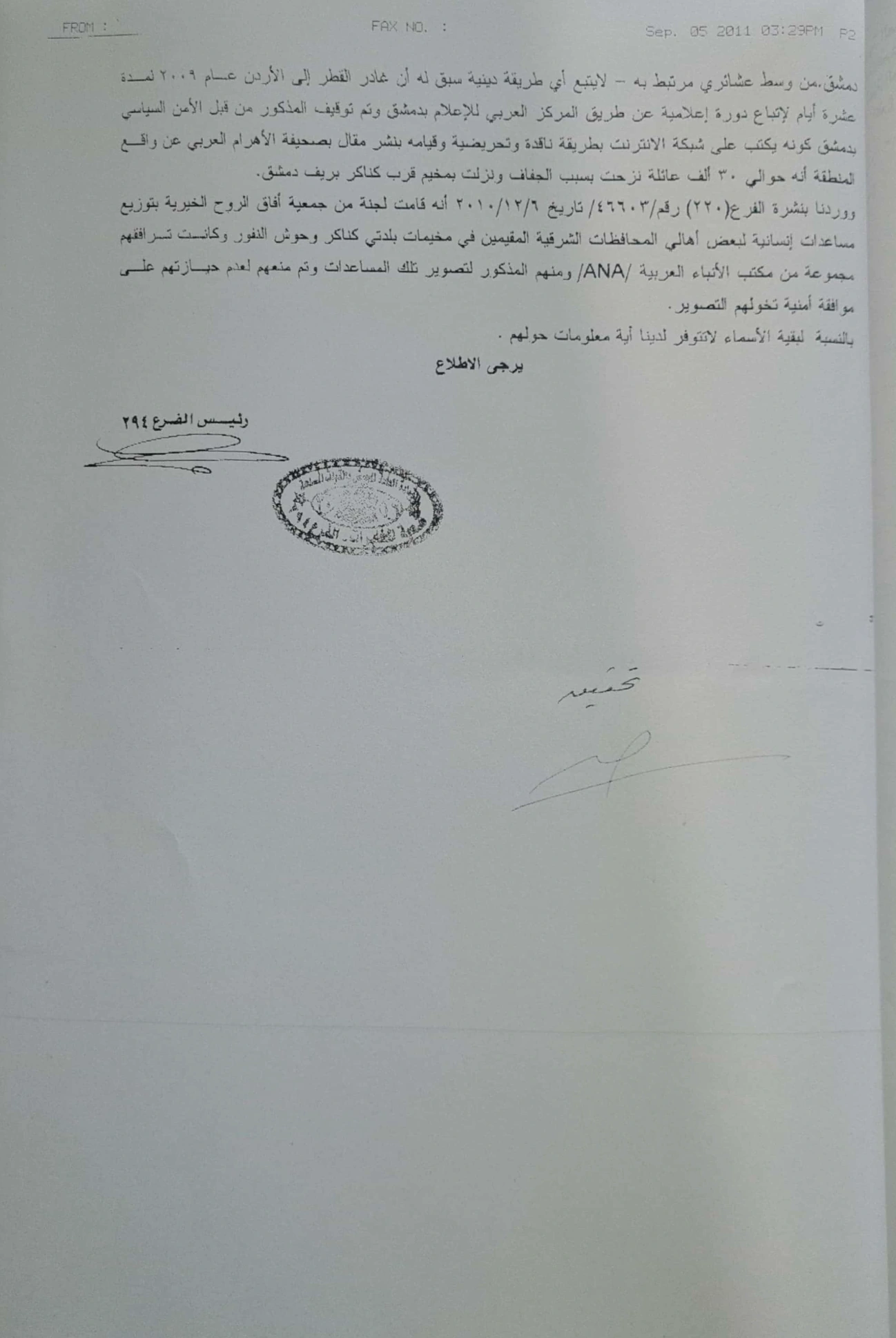
Branch 294 memorandum · page 2
Continuation of the Branch 294 intelligence summary.
Internal forwarding note
A Unit 215 memo circulated within the intelligence chain after the arrest.
Limits of this reading
The institutional structure shown here provides general context and includes information that extends beyond the years of this dossier. What the dossier itself establishes concerns 2009–2011 and is grounded in its text and the twenty-five photographed pages reproduced here. Branch 251 / al-Khatib belongs to the General Intelligence Directorate (State Security), not Political Security. The Military Public Prosecutor and Adra Prison are outside the branches of Military Intelligence.
The system map is a map of institutional jurisdictions and documented correspondence, not a map of the detainee’s physical movement. The filmed testimony was recorded in the building after the fall of the Assad regime and is presented alongside the documents as a separate evidentiary layer.
On redactions
Documents selected for public presentation are reviewed under the museum’s legal and ethical publication policies, with particular attention to privacy, personal data and the protection of third parties. Where necessary, names and identifying details are obscured in the published reproductions. The page treats the surviving records as evidence and preserves conflicts between them rather than smoothing those conflicts into a single official narrative.
It began with an article.
It ended in detention.
File 4217 documents more than what happened to one person. It shows how fragments of information moved through a security apparatus until writing, travel, relationships and phone calls could be transformed into an arrest file.