Amer Matar
Amer Matar
Amer Matar

About Amer Matar

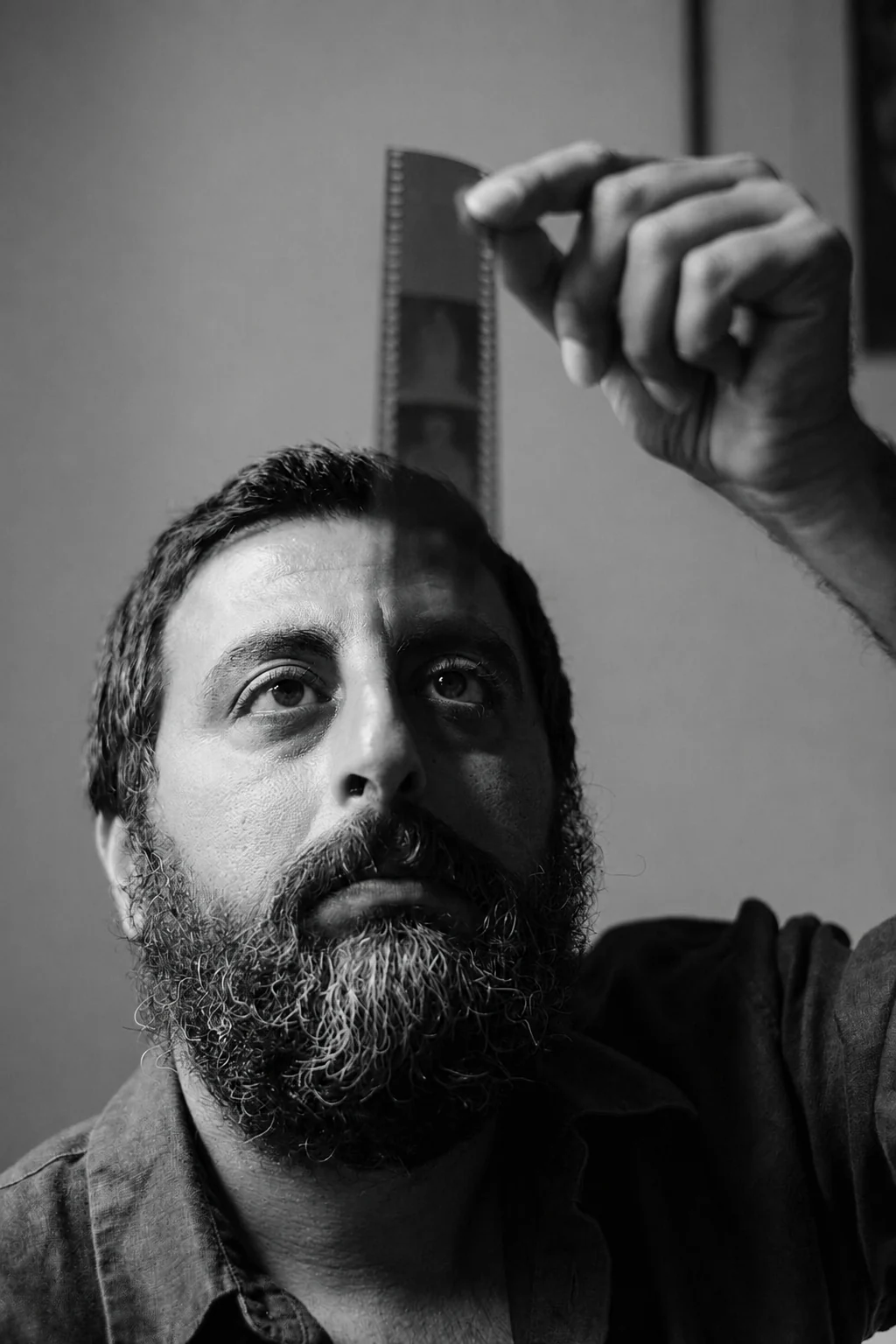
Amer Matar is an investigative journalist and documentary filmmaker.
His work brings together investigative journalism, historical research and reconstruction, archival research and spatial documentation, with a particular focus on prison and detention systems in Syria and Iraq and the violations associated with them. He reconstructs the history of these systems and the crimes committed within them through documents, testimony and archives, and by reading architecture and place as part of the evidence.

Matar began in journalism and documentary film, but his work gradually developed into a form of research into recent history. He is interested in events whose traces do not remain in a single source, but are distributed across a security file, a survivor’s memory, a building, a photograph, an administrative record, a database or an archive. A central part of his work is to bring these traces together and read them in relation to one another, to understand what can be established, what remains uncertain and what the relationships between sources reveal.

He founded and directs the Prisons Museum, a civil society organization working from Berlin and Damascus that combines investigative journalism, site documentation, document archives, survivor testimony, spatial documentation and 3D reconstruction. Its work includes the ISIS Prisons Museum, the Syria Prisons Museum and Jawab, a platform developing a protected pathway for families of the missing to search records connected to their relatives.

Before that, he founded AlShare Media Foundation in 2010 and the Syria Mobile Film Festival in 2013. Earlier phases of his work included reporting from inside Syria, documentary production, cultural projects, film training and work with local media and civil society organizations. He studied journalism at Damascus University, was arrested twice in 2011 because of his journalistic work and was tortured in detention. In 2021 he testified before the Koblenz Higher Regional Court in Germany in the trial of former Syrian intelligence officer Anwar Raslan.

Since 2017, the work has increasingly moved from documenting events to researching the systems that produced them. The search for people disappeared by ISIS could not be understood through testimony alone; it required reading detention sites, internal records, testimony, mass graves and the organization’s administrative sequence together.

After the fall of the Assad regime in December 2024, Matar returned to Syria and, with the Prisons Museum team, took part in extensive documentation of prisons, security branches and records left by the Syrian detention system. Questions first developed through work on ISIS expanded to the institutions of the Syrian security state itself: how they functioned, how orders, detainees and documents moved between their parts, and what buildings, records and testimony reveal when read as components of one system.

This methodology developed collectively inside the Prisons Museum. Researchers, journalists, archivists, architects, documentation teams and technologists work to connect document to testimony, person to place, site to chronology, and administrative record to institutional structure. Tools such as 360° imaging, photogrammetry, 3D reconstruction and relational databases are used when they help test evidence or preserve its context.

Technology is not the subject of the work in itself. The aim is to build a record that can be revisited, tested and used: to understand what happened, preserve the history of places and people, support families, researchers and journalists, and make evidence available to public history and processes of justice and accountability.

Work over time

2004–2010

Studied journalism at Damascus University.

2008

Began working in journalism and writing for the Arab press, including Lebanon’s An-Nahar and Al-Hayat.

2010

Founded AlShare Media Foundation in Syria with a group of journalists, photographers, artists and filmmakers, and began documenting stories of internal displacement and the drought crisis before the uprising.

2011
  • Covered the Syrian uprising, documenting protests and repression and producing films and reports from inside Syria.
  • Worked with Al Arabiya on the programme ‘Dialogues from the Syrian Arena’, and produced reports for Al Arabiya, France 24 and Reuters through 2012.
  • Co-directed Smuggling 23 Minutes of a Revolution, screened on Al Arabiya and in Paris, Berlin and Brussels; Azadi, awarded the silver medal at the Rotterdam Arab Film Festival and broadcast by France 24; and Hama 1892 Hama 2011.
  • 28 March 2011: first arrest because of journalistic work, at Branch 251 (Al-Khatib).
  • 3 September 2011 – 4 January 2012: second arrest and torture in detention, including at Branch 215 and Adra Prison.
2012
  • Moved to Germany.
  • Heinrich-Böll-Stiftung fellowship, and the beginning of the PEN Writers in Exile fellowship period through 2015.
  • Launched the Syrian Street Festival (2012–2015), with events and exhibitions in Amman, London, Toronto, Vancouver, Bucharest, Paris and Berlin.
  • Contributed to the book Syria… The Difficult Path to Freedom.
2013
  • Began preparations for the Syria Mobile Film Festival.
  • 13 August: ISIS abducted his younger brother, photographer Mohammad Nour Matar, in Raqqa. His fate remains unknown — an experience that later became one of the roots of the ISIS Prisons Museum and Jawab.
  • Contributed to Writing from Exile and Syria Speaks: Culture and Arts from the Front.
2014
  • First edition of the Syria Mobile Film Festival, which continued through 2017/2018 and included the Pixels training programme, 13 production grants and screenings in more than twenty cities worldwide.
  • Contributed to Syria from the Inside.
2016
  • Contributed to Texts from Exile.
  • Completed the production of a body of feature-length films (2011–2016) and short films (2011–2014) through AlShare.
2017
  • Began documenting ISIS prisons and mass graves while searching for colleagues and missing people — work that later developed into the Prisons Museum and then the ISIS Prisons Museum. The team subsequently began documenting 100 prisons and mass-grave sites across Syria and Iraq.
  • Launched the Raqqa Between Two Bridges programme to support civil society in Raqqa and Deir Ezzor: working with 24 organisations and producing 407 short videos (2017–2021).
2021
  • Testified before the Higher Regional Court in Koblenz in the trial of former Syrian intelligence officer Anwar Raslan — one of the most significant universal-jurisdiction trials concerning crimes committed by the Syrian security services. The experience was covered by BBC World Service in How I Brought My Jailer to Justice and by the Committee to Protect Journalists.
2024
  • 11 October: public launch of the ISIS Prisons Museum at the National Theatre in London.
  • November: the project’s first physical exhibition, Three Walls: Spatial Narratives of Old Mosul, at UNESCO headquarters in Paris.
  • 8 December: fall of the Assad regime; returned to Syria and led extensive documentation of prisons, security branches and records with the Prisons Museum team.
  • Consolidation of Prisons Museum e.V. as an independent specialised institution in Berlin, with a large archive and a team of more than 70 journalists, photographers, architects, archivists, programmers and lawyers.
2025
  • Documented more than 70 detention sites and prisons belonging to the former regime during the first half of the year.
  • 15 September: launch of the Syria Prisons Museum at the National Museum in Damascus, beginning with the file of Sednaya Military Prison.
  • Published major investigations including Sednaya Military Prison and Branch 215 of the Military Intelligence Directorate.
2026
  • March: opening of SEDNAYA: Syria’s Architecture of Repression and Death at the Berlin-Hohenschönhausen Memorial, running through September 2026.
  • Continued development of Jawab for families, with 2026–2030 targets including organising around 100,000 records related to missing people and serving tens of thousands of families.

Press and conversations about the work

Contact